A flat roof rewards attention and punishes neglect, and it does both quietly. Keep up with a handful of small tasks and it will outlast its warranty without drama. Ignore it and the same roof finds a way to fail years early, usually at the worst possible time. Here is the maintenance that actually matters, split into what you can keep an eye on yourself and what is worth handing to a pro.
Twice a year, and after every big storm
The rhythm is simple: give the roof real attention in the spring and again in the fall, and take a look after any major storm. Spring catches whatever winter's freeze and thaw loosened. Fall gets you tight before it starts again. That timing does most of the work of keeping a flat roof alive.
What you can keep an eye on yourself
You do not need to be a roofer to catch the early warnings. From the roof edge, a window, or a careful walk if it is safe to be up there, watch for these:
- Standing water. A day or two after rain, is water still sitting in spots? Ponding is the single biggest thing that shortens a flat roof's life.
- Clogged drains and scuppers. Leaves, seed pods, and debris block drainage and force water to sit. Keeping them clear is the highest-value thing on this list.
- Debris and overhanging branches. Anything that holds moisture against the roof or scrapes the surface is working against you. Trim branches back off the roof.
- Interior stains. A new water mark on a top-floor ceiling is the roof telling you something. The stain is rarely right under the leak, but it is your early warning.
- Anything obviously loose. A flapping edge, a lifted flashing, a boot pulling away from a pipe. You do not have to fix it, just note it and call.
What to leave to a pro
The rest of the checklist is where a trained eye and the right materials pay off, and where a wrong move can void a warranty or make a small problem worse. Leave these to a roofer:
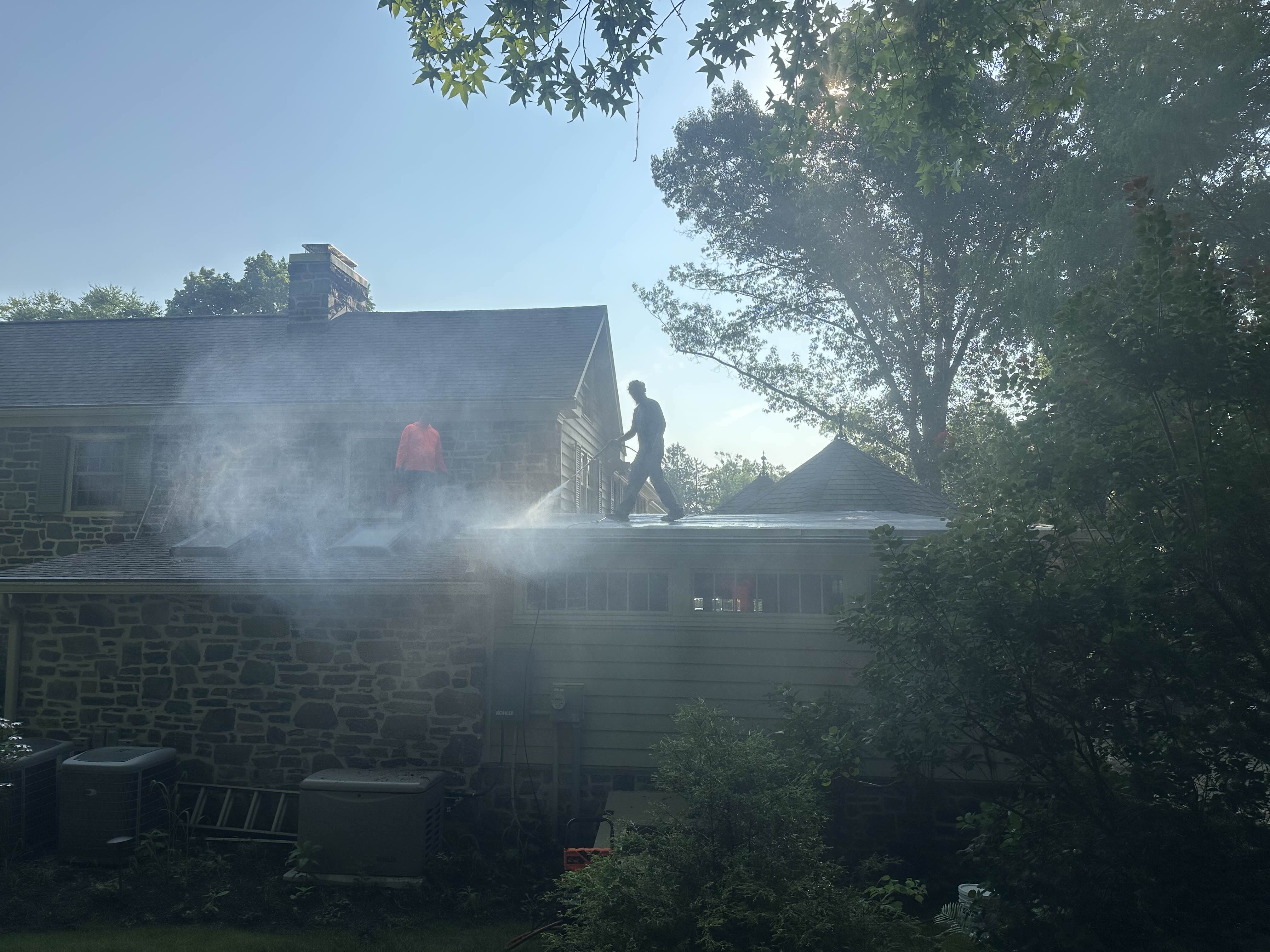
- Washing the surface. Dirt and biological growth dull a reflective roof and hide developing problems. A proper wash with the right cleaner keeps it bright and readable, without blasting the coating off in the process.
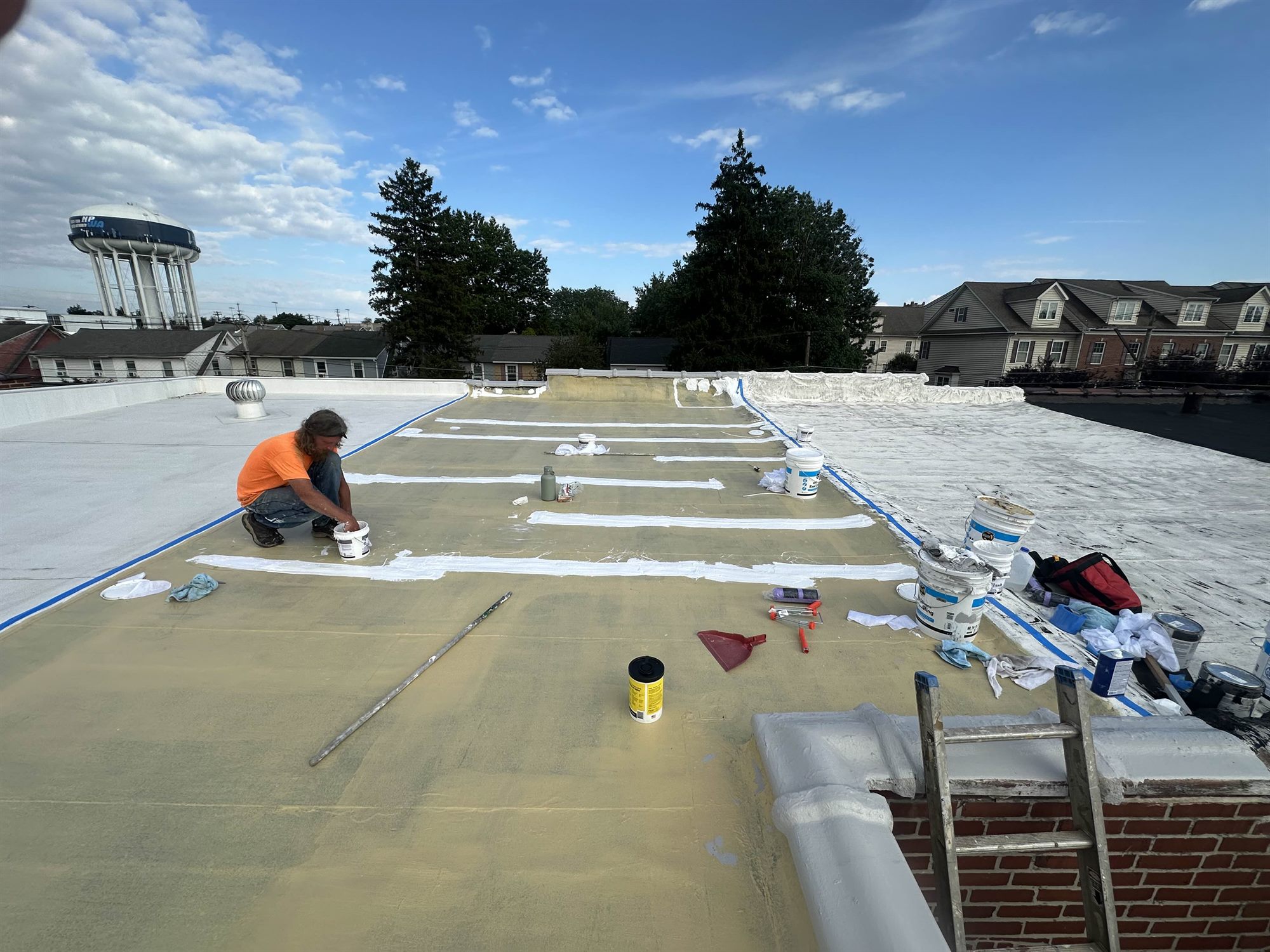
- Sealing seams, flashings, and penetrations. These are the places roofs leak, and they need the right compound and technique, not a tube of the wrong caulk from the hardware store.
- Checking coating thickness. On a coated roof, knowing how much silicone is left tells you when a recoat is genuinely due. That is a measurement, not a guess.
- Tracing an actual leak. Finding where water really gets in, versus where it shows up inside, is its own skill. Our post on the signs a roof is a coating candidate gets into why the details matter so much.
The silicone advantage: maintenance is what makes it last forever
If your roof is coated in silicone, maintenance is not just protection, it is the whole payoff. Silicone is recoatable forever. When the coating eventually wears thin, you do not tear anything off. You wash the roof and roll on a fresh coat, which resets the service life for a fraction of a new roof's cost. But that only works if the roof has been kept clean and the details kept tight in the meantime. Maintenance is how you actually cash in the promise that a silicone roof never has to come off.
The easiest way to never miss a step
Honestly, the hardest part of roof maintenance is remembering to do it. The roof is out of sight, the tasks are easy to postpone, and the cost of skipping them does not show up until it is expensive. That is the entire reason we offer a roof maintenance plan: the visits happen on schedule, the cleaning and small repairs get done, the coating gets tracked, and it is all documented for your warranty file. You stop thinking about the roof, which is the point.
If you would rather start with a look, a free inspection tells you where the roof stands today and what it needs to stay there.
A flat roof does not ask for much. Keep the water moving, keep the surface clean, catch the small stuff early, and it will pay you back for decades.