Services
Flat roof inspection.
A free on-site look from an owner who has spent 25 years on roofs, plus a documented written report when you need one in hand. Serving flat and low-slope roofs across SE Pennsylvania and the Lehigh Valley.
Most flat roof problems are cheap to fix early and expensive to ignore. A seam that has just started to open, a flashing that is lifting at one corner, a low spot that holds water a day too long: caught now, these are a morning of work. Caught after the water has been getting in for a year, they are soaked insulation, stained ceilings, and a much bigger bill. A regular inspection is how you stay on the cheap side of that line.
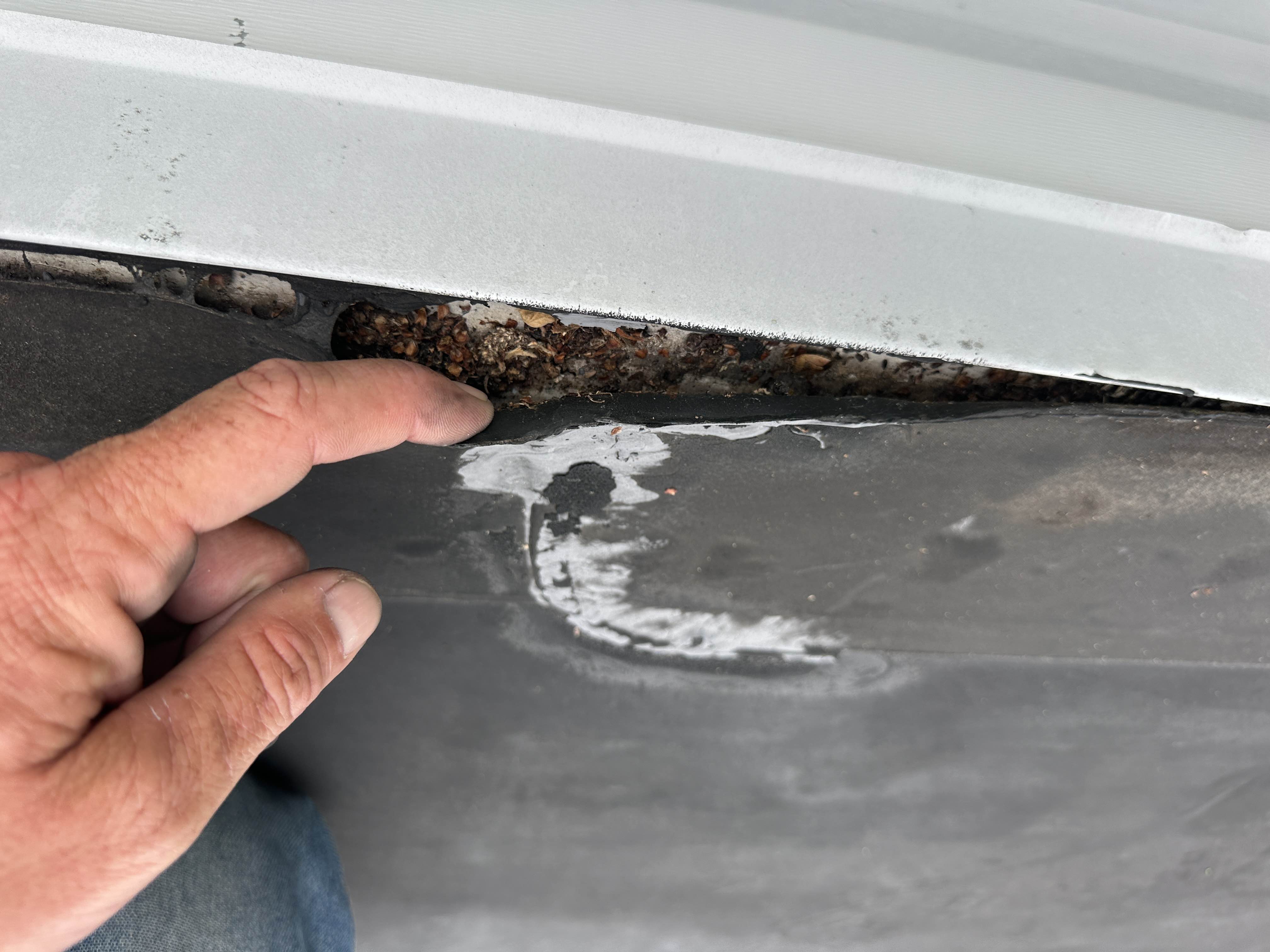
Two ways we inspect a roof
We handle inspections two ways, and you pick the one that fits your situation.
The free on-site assessment
This is the one most owners want. One of the owners, Keith, Brian, or Jason, comes out, gets on the roof, and walks the whole thing. We photograph the details, note what we see, and give you a straight answer: what condition the roof is in, what is causing any leaks, and whether it is a candidate for a coating or genuinely needs to come off. There is no charge and no obligation, and no salesperson will follow up to pressure you. If the roof is fine, we will tell you that too.
The documented inspection report
Sometimes a verbal read is not enough and you need documentation in hand. For that we offer a formal written inspection report: detailed photos, a clear description of the roof's condition, moisture and ponding notes, an estimate of remaining service life, and specific recommendations. It is a paid service, quoted up front based on the size and complexity of the roof, and it is built to hold up when someone else is reading it.
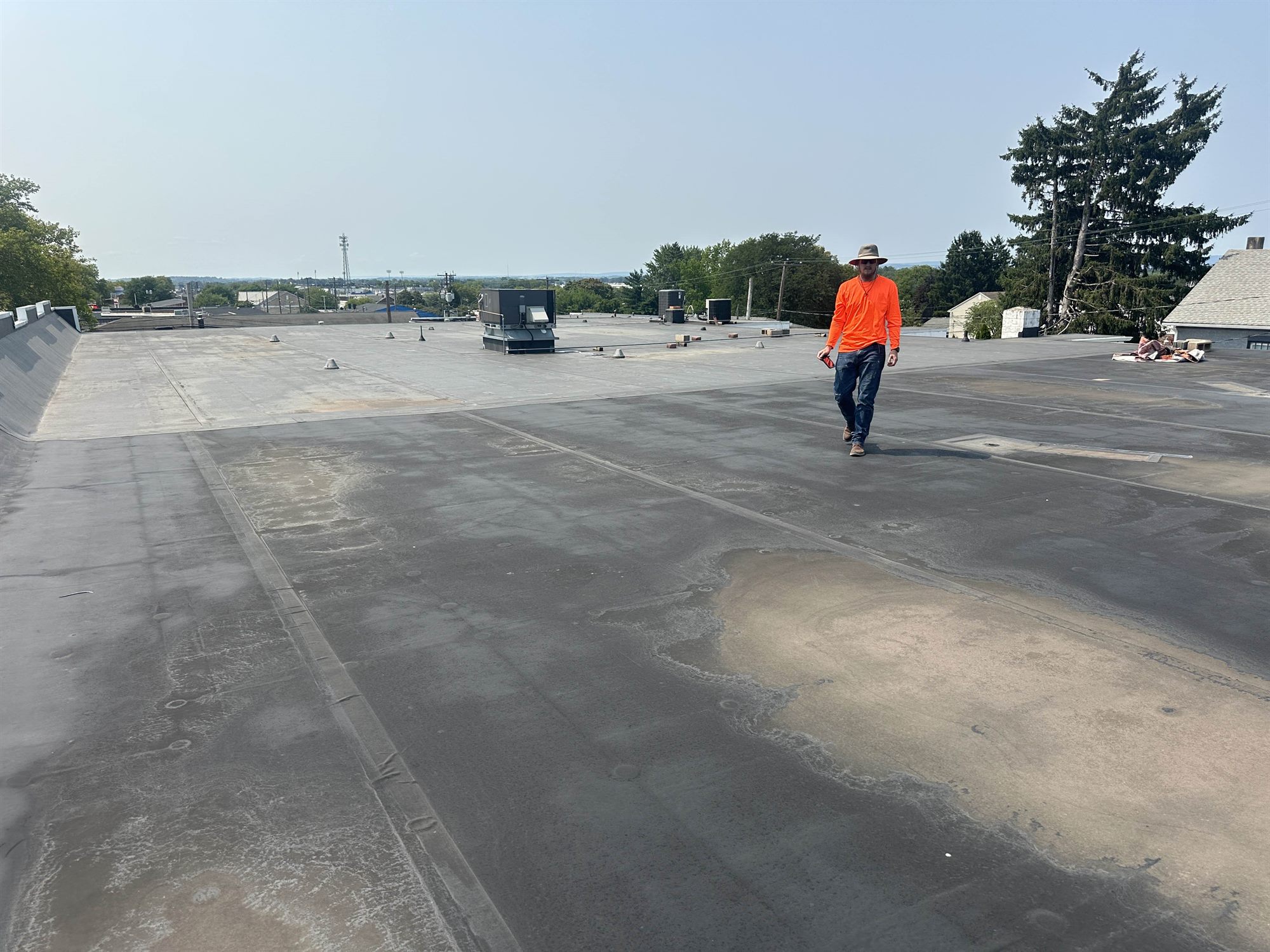
When you need the written report
A documented report earns its cost in a few specific situations:
- Buying or selling a building. A buyer wants to know what they are inheriting, and a seller wants to head off a lowball number based on a roof that is actually sound. A written report settles it.
- Insurance. Carriers increasingly want proof of a roof's condition at renewal, and a documented inspection can support a claim or answer a non-renewal letter.
- Capital budgeting. When the finance side is planning several years out, they want a written condition assessment and a realistic timeline, not a guess.
- A dispute or a second opinion. If someone has told you the roof needs a full tear-off, a documented report gives you an independent read before you spend six figures.
What we check
Whether it is the free look or the paid report, we go over the whole system, because a flat roof is only as good as its weakest detail:
- The deck and structure underfoot, for soft or spongy areas that signal trapped moisture.
- Drainage and ponding, since standing water is what kills most flat roofs early.
- Seams, flashings, penetrations, and parapet transitions, the places leaks almost always start.
- The membrane itself: chalking, shrinkage, blistering, splits, and granule loss depending on the roof type.
- Past repairs, to see what has already failed and been patched.
- Interior signs of water, where they are visible, to trace a leak back to its real source.
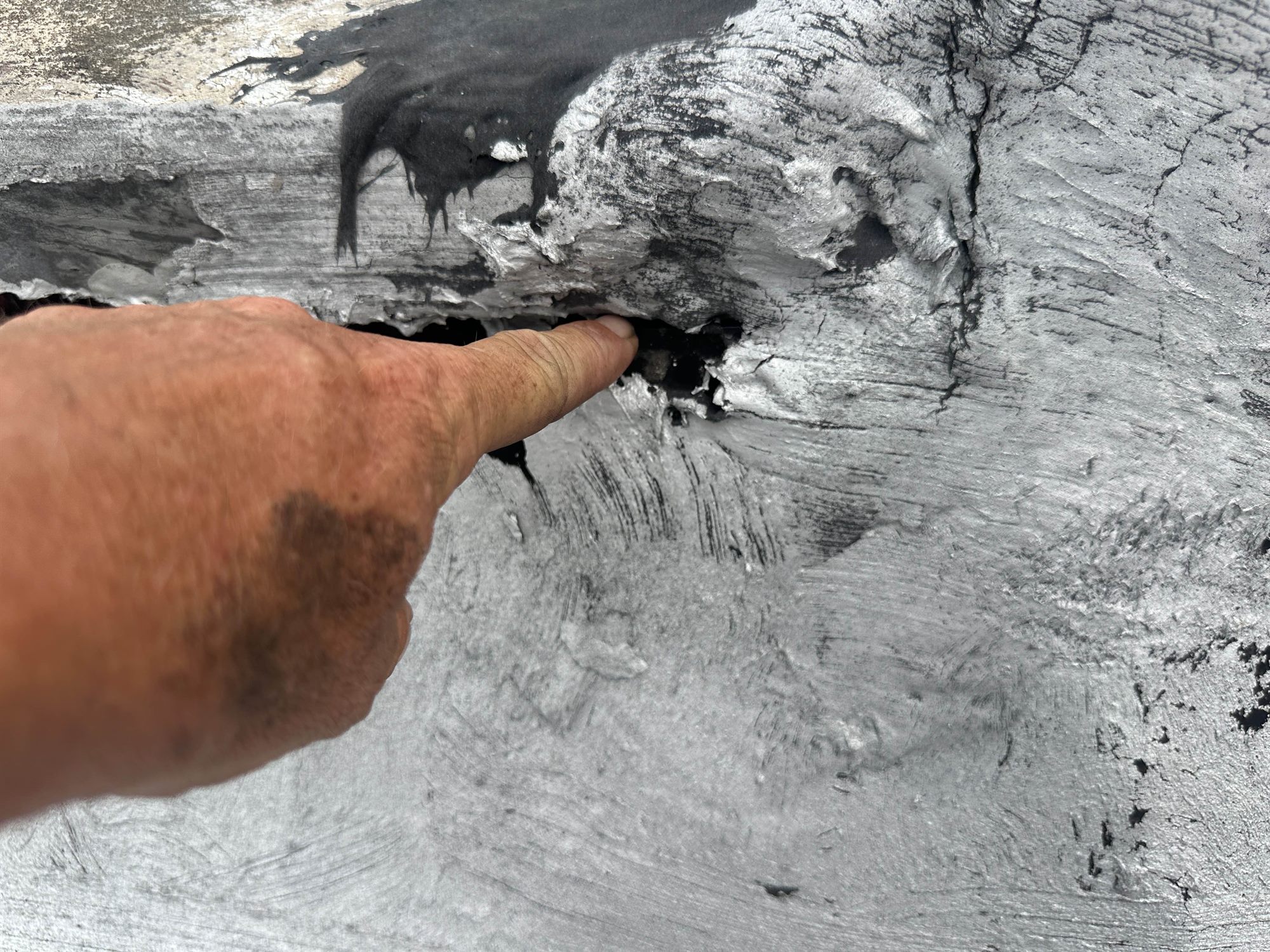
If we find that the leaks trace to a structural failure rather than a surface problem, we will say so. A coating restores the waterproofing surface of a roof. It does not fix a rotted deck, and we will never tell you otherwise. For the surface problems, our flat roof repair and coating services are usually the fix.
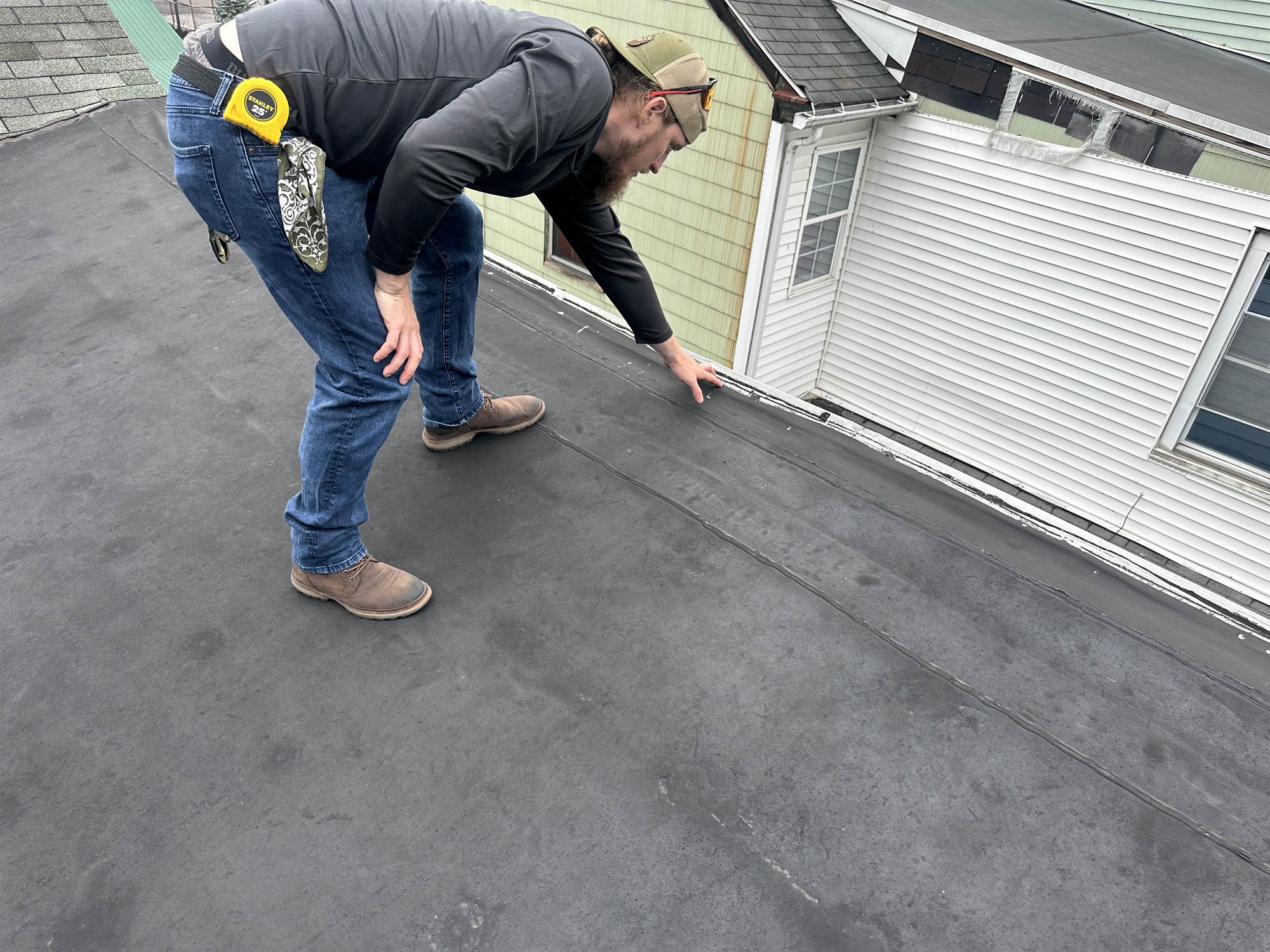
How often should you inspect a flat roof?
Twice a year is the standard: once in spring after the freeze and thaw of winter, once in fall before it comes back. Add a look after any major storm, and after any work has been done up there by another trade. Staying on that schedule is the whole idea behind a roof maintenance plan, which folds the inspections, the cleaning, and the small fixes into one arrangement so nothing gets missed.
Where we inspect
We cover ten counties across Southeastern Pennsylvania and the Lehigh Valley from our base in the West Chester area. See the full service area for your county or town.
See what a full roof report looks like
When you order the documented report, this is what you get: a clean, organized record of your roof's condition, page by page, with photos and plain-language notes on every area of concern. Below is a real report, with the owner's details removed, so you can see exactly what is in one. Tap any page to open it full size.
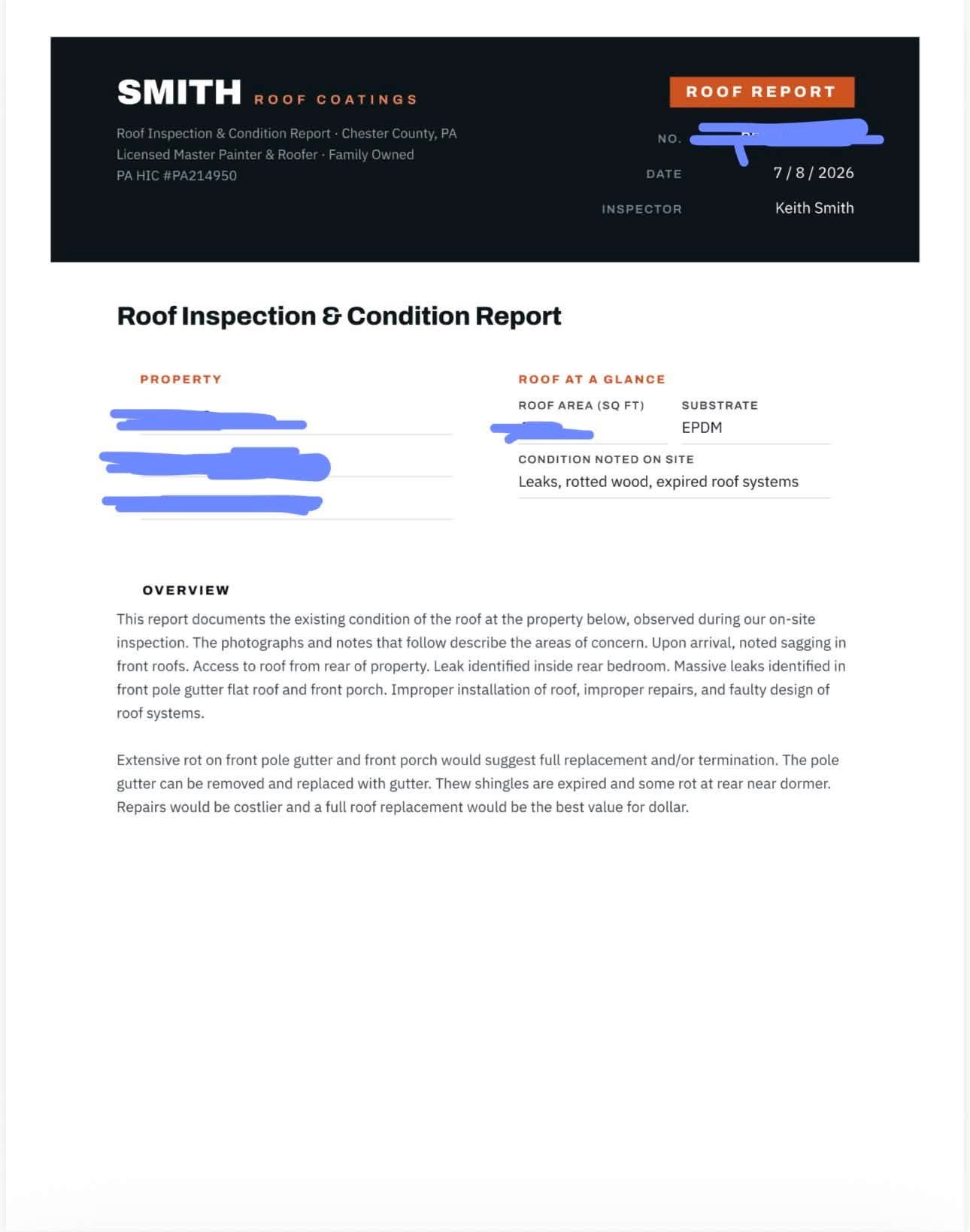
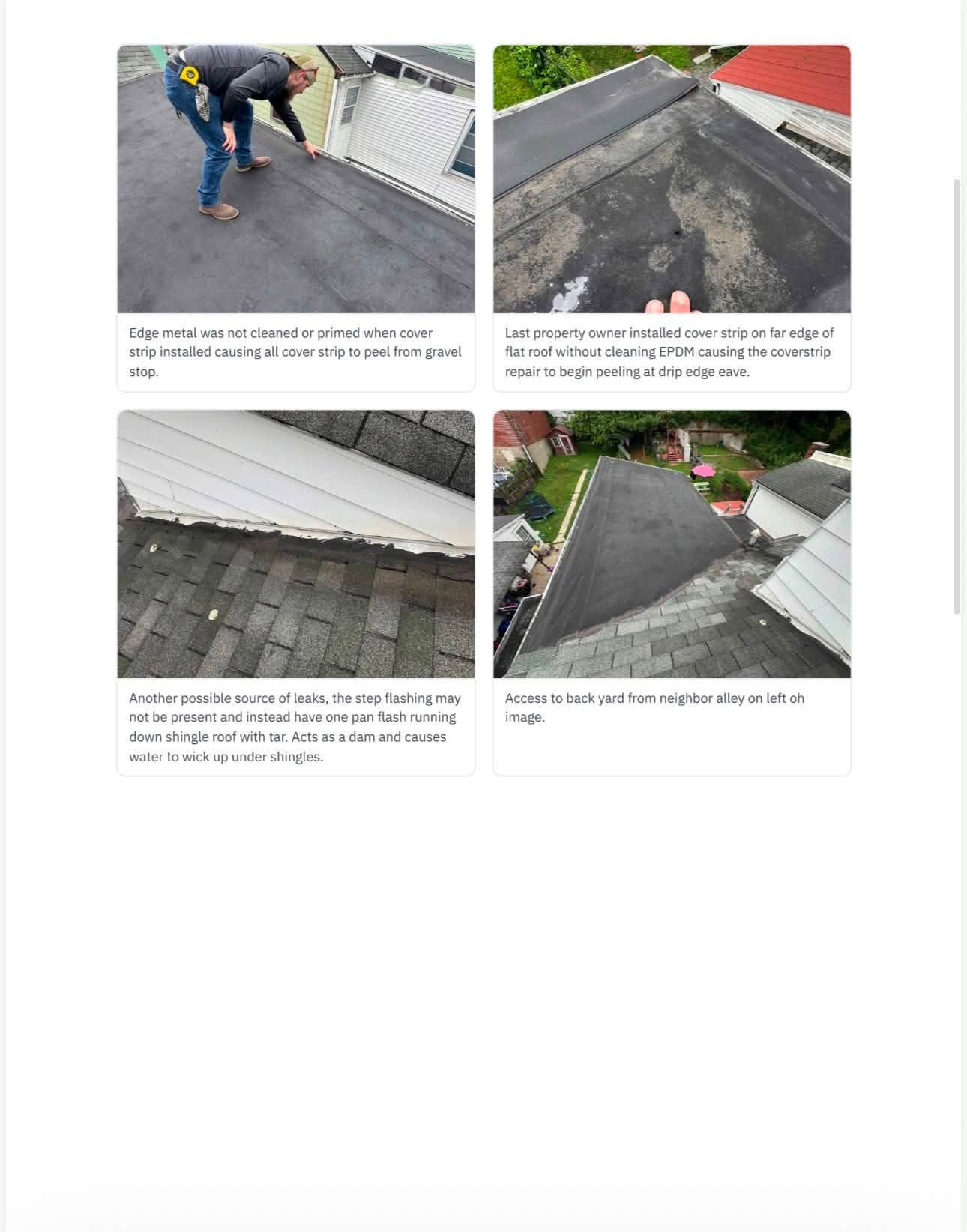
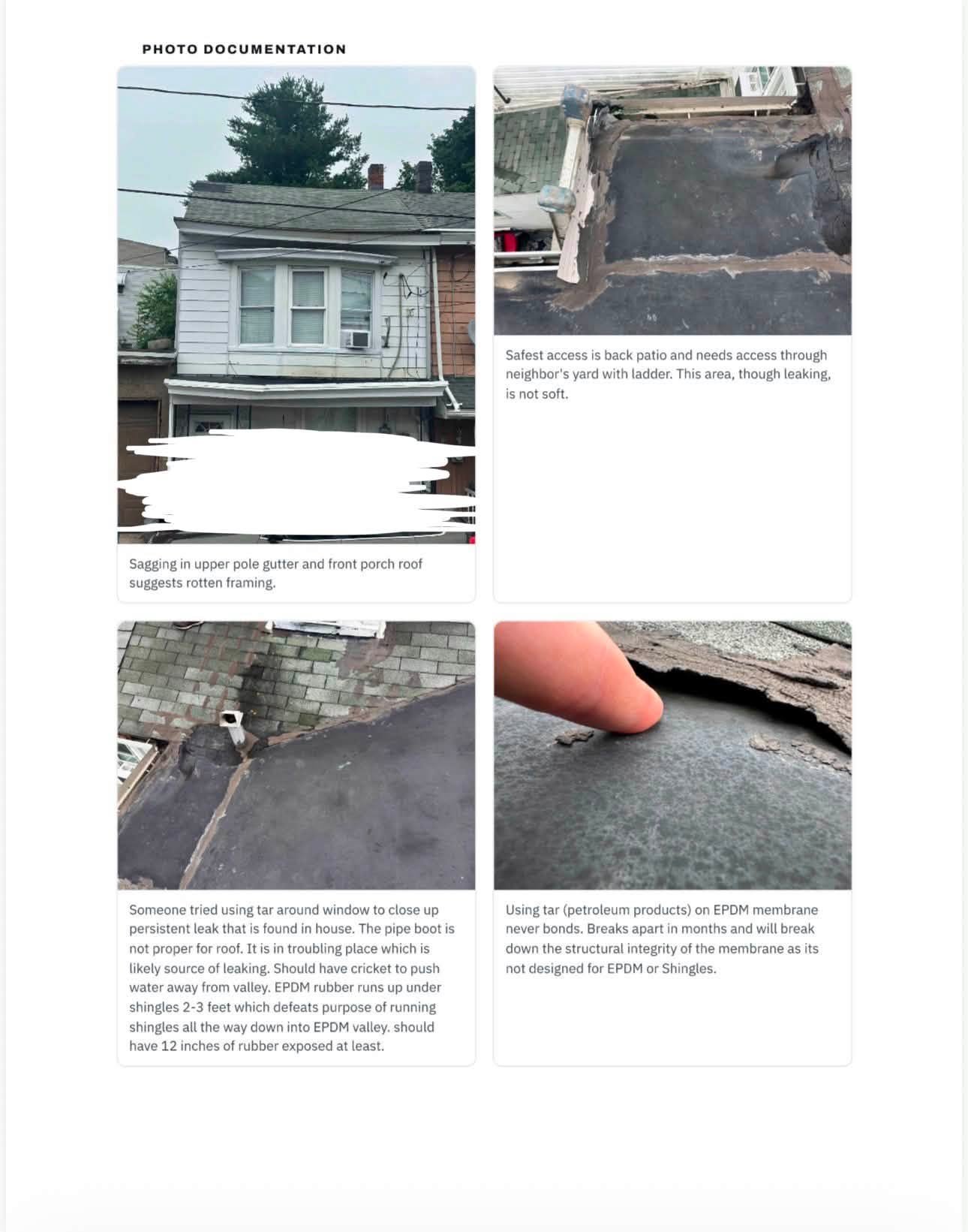
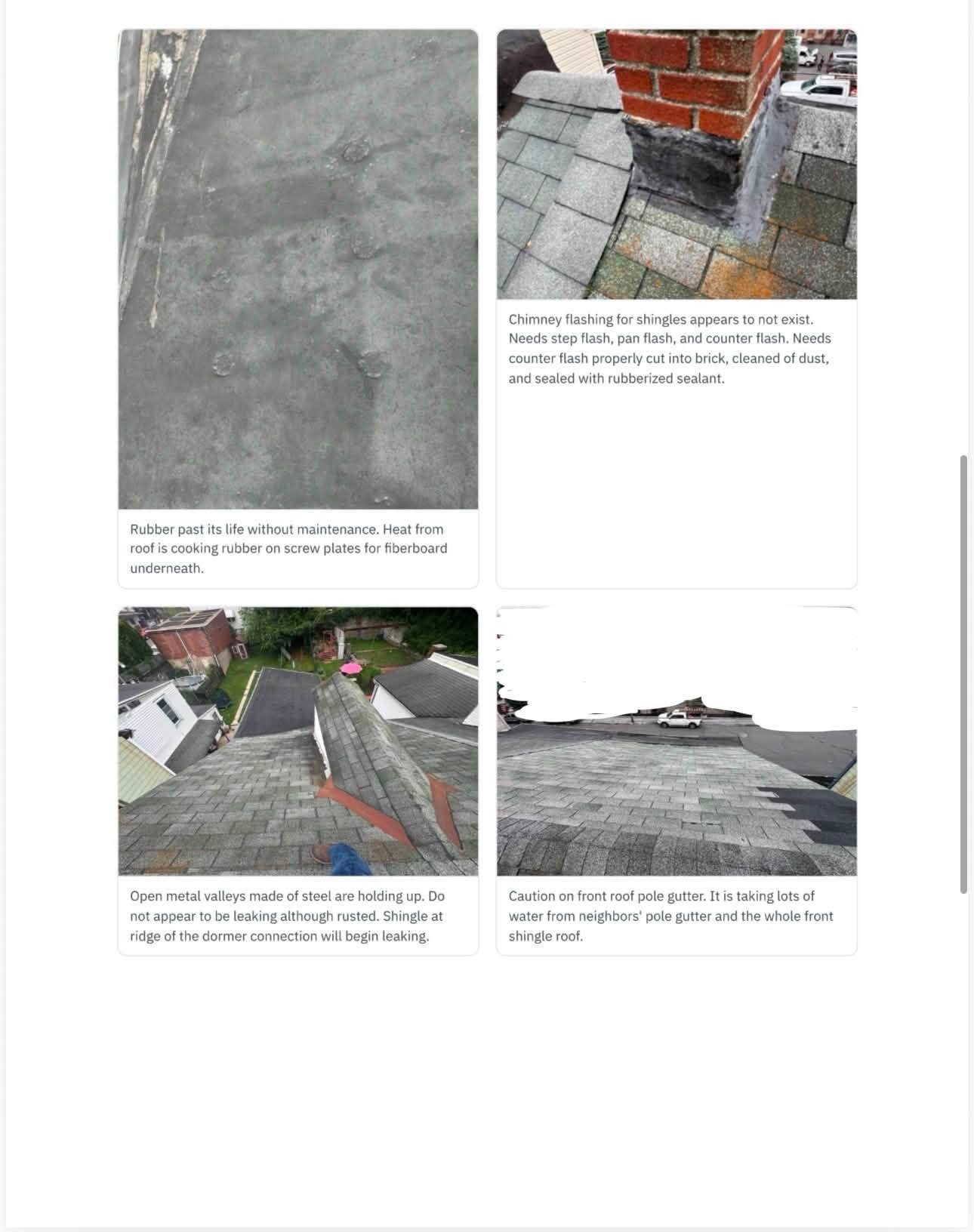
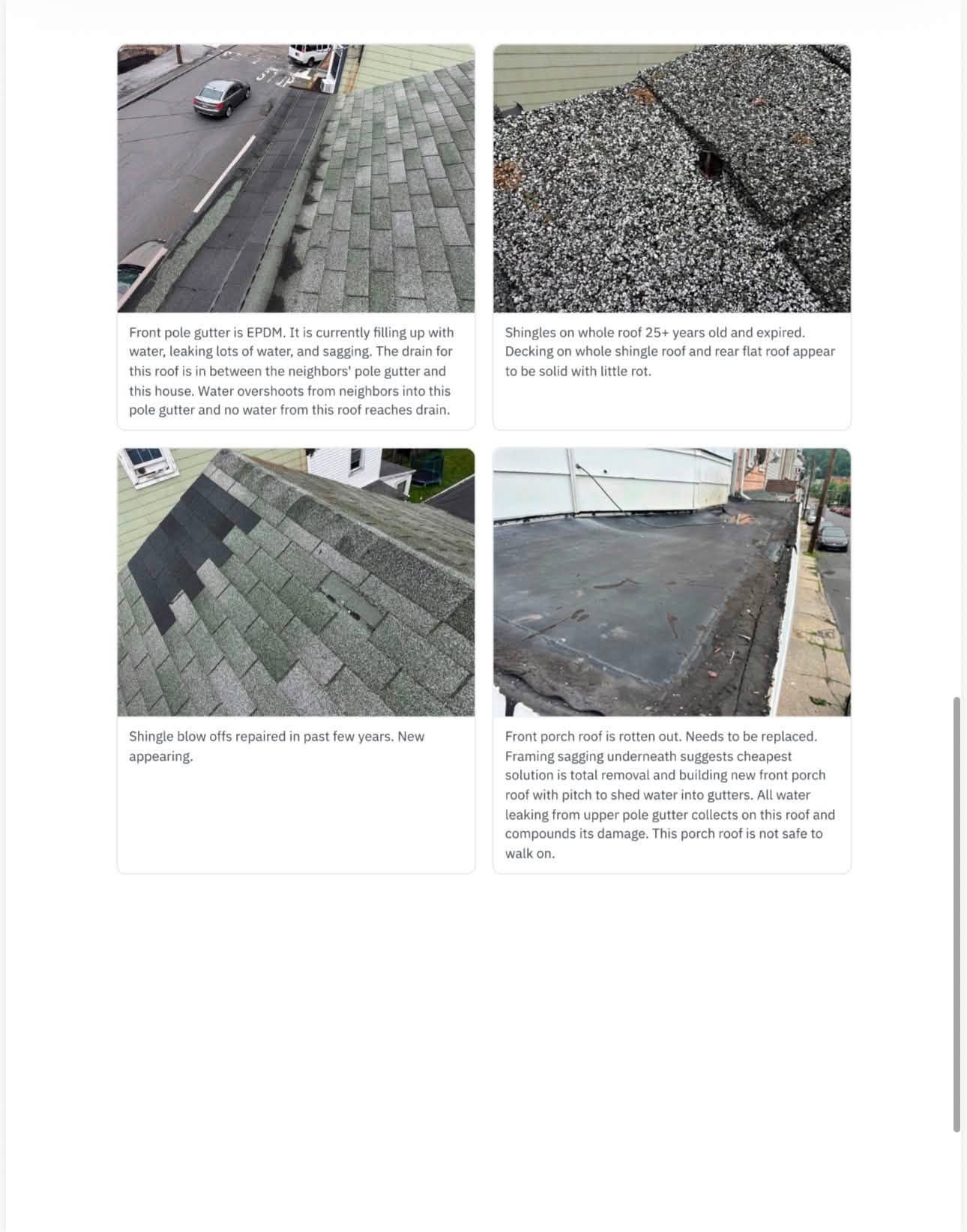
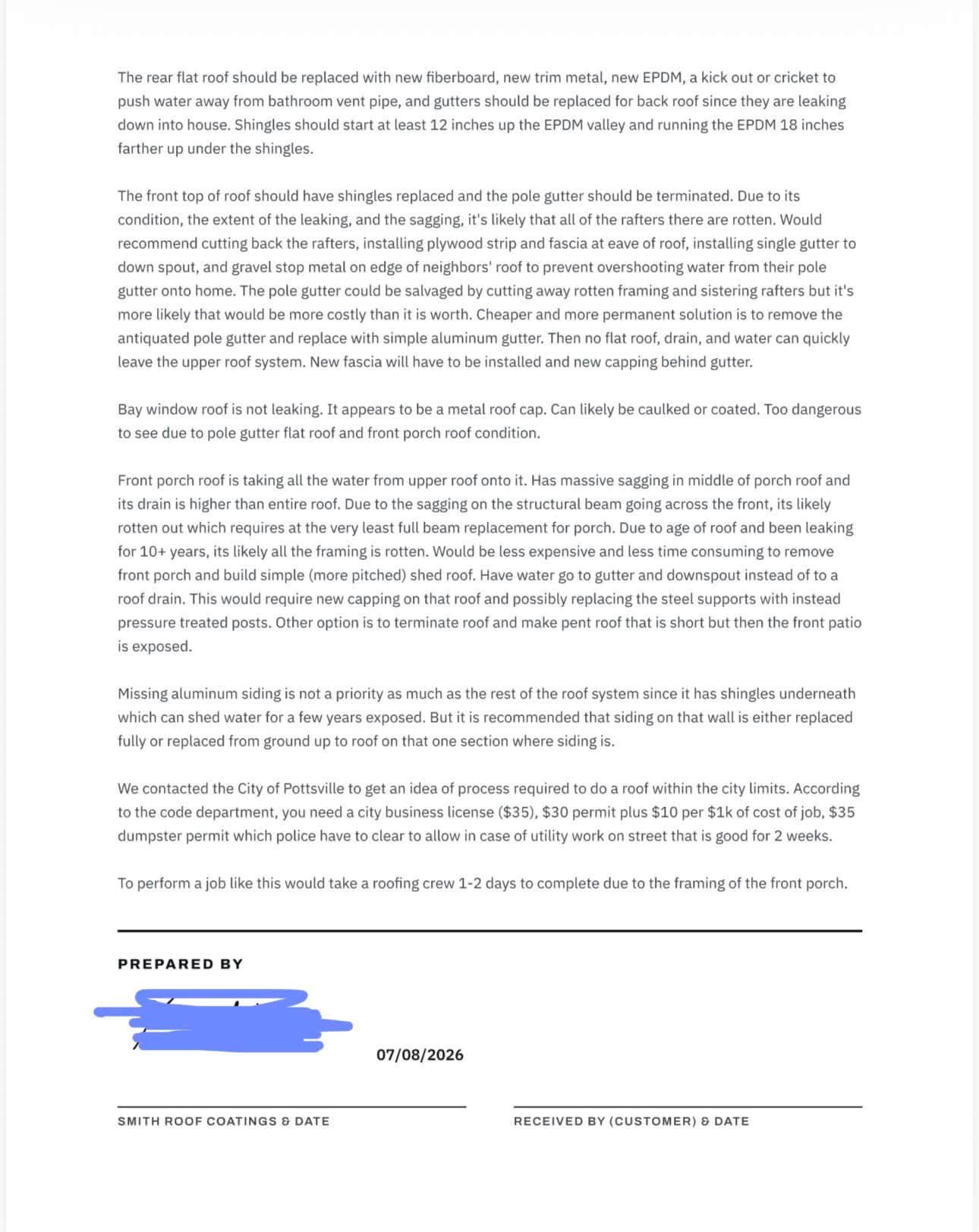
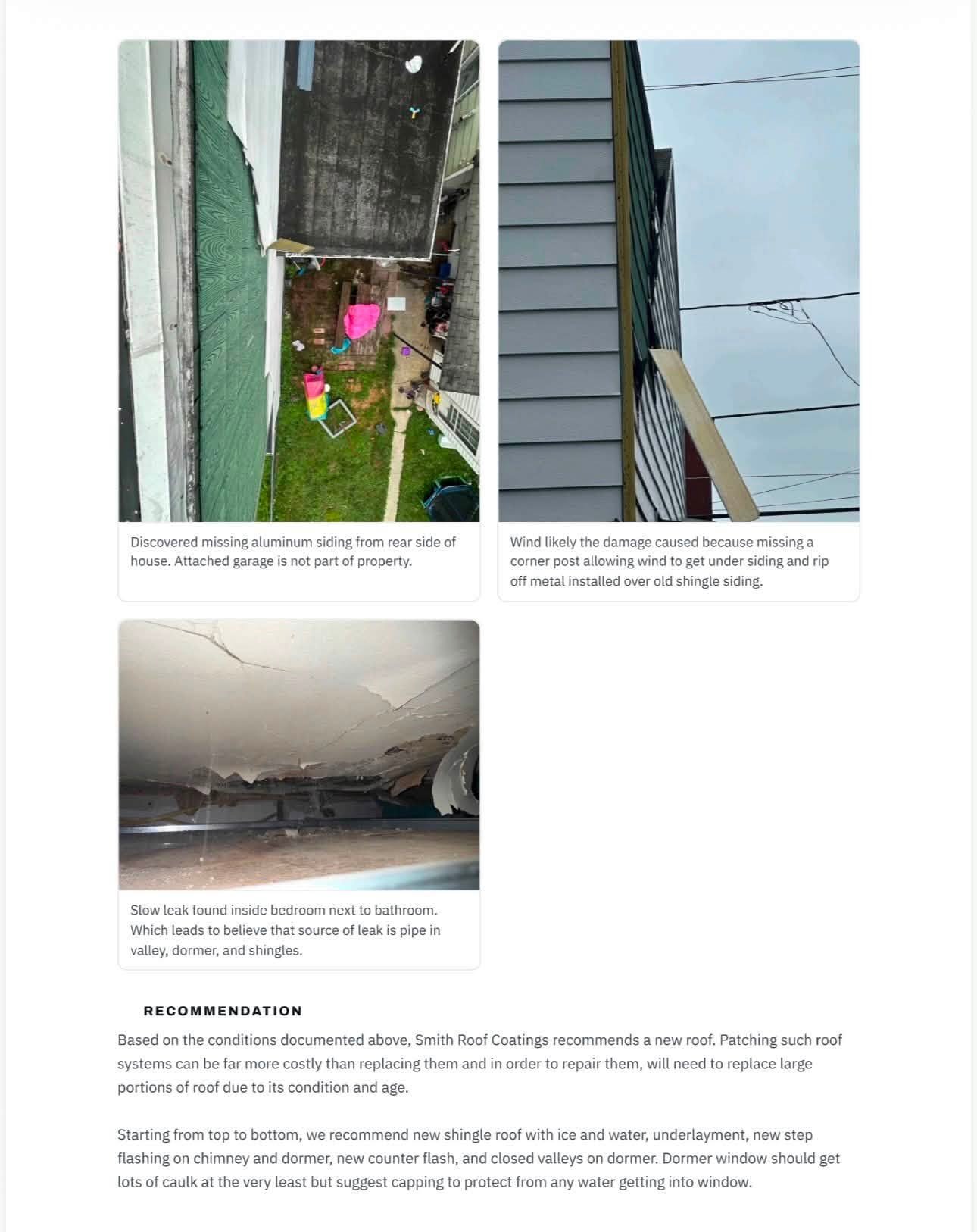
Sample report. The property owner's name, address, and report number have been removed for privacy.