Services
Modified bitumen roof coating and restoration.
Mod-bit and built-up roofs dry out long before they wear out. We restore them two ways: 100% silicone or reflective aluminum coating. Here is how we choose.
Home/Services/Modified bitumen restoration
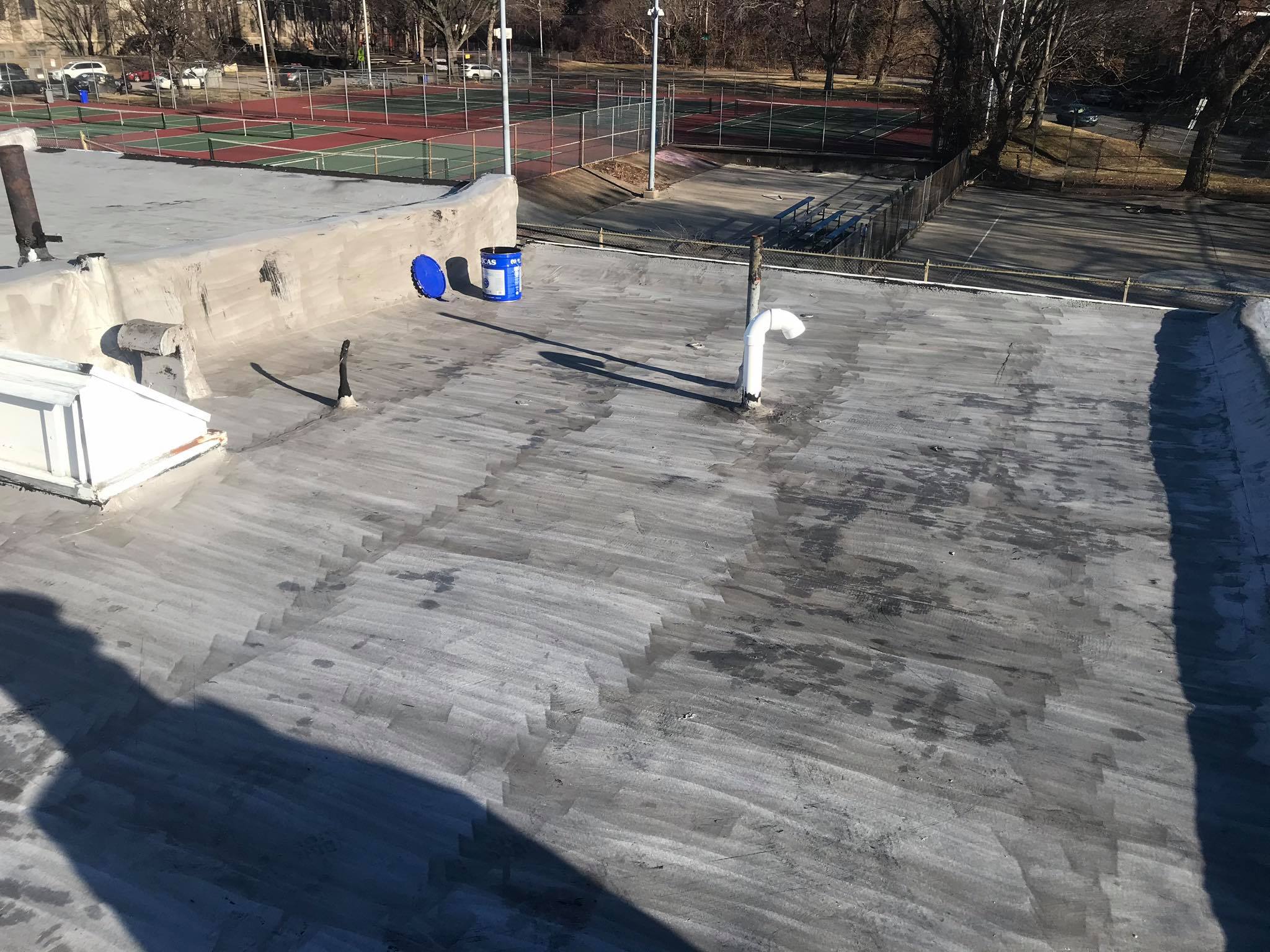
Asphalt-based flat roofs, modified bitumen and the older built-up (BUR) systems, age in a particular way. The sun cooks the oils out of the asphalt. The surface granules that were there to protect it wash into the gutters. The membrane dries, shrinks, and starts to crack at the seams and flashings. From the ground it just looks tired; up close you can see the roof literally losing its surface.
None of that means the roof is finished. The plies underneath are usually still sound, and a dried-out mod-bit roof is one of the most rewarding substrates to restore. Unlike most coating outfits, we bring two tools to this job instead of one, because the right answer is not the same for every roof.
Option one: 100% silicone restoration
The full treatment, and the right call when the roof needs to be made watertight again, not just protected. The roof gets power washed, every seam, crack, and flashing gets repaired and then reinforced with polyester fabric embedded in silicone, and the entire surface gets two coats of Mule-Hide 100% silicone applied to the manufacturer's mil spec, with wet-mil readings logged for the warranty file.
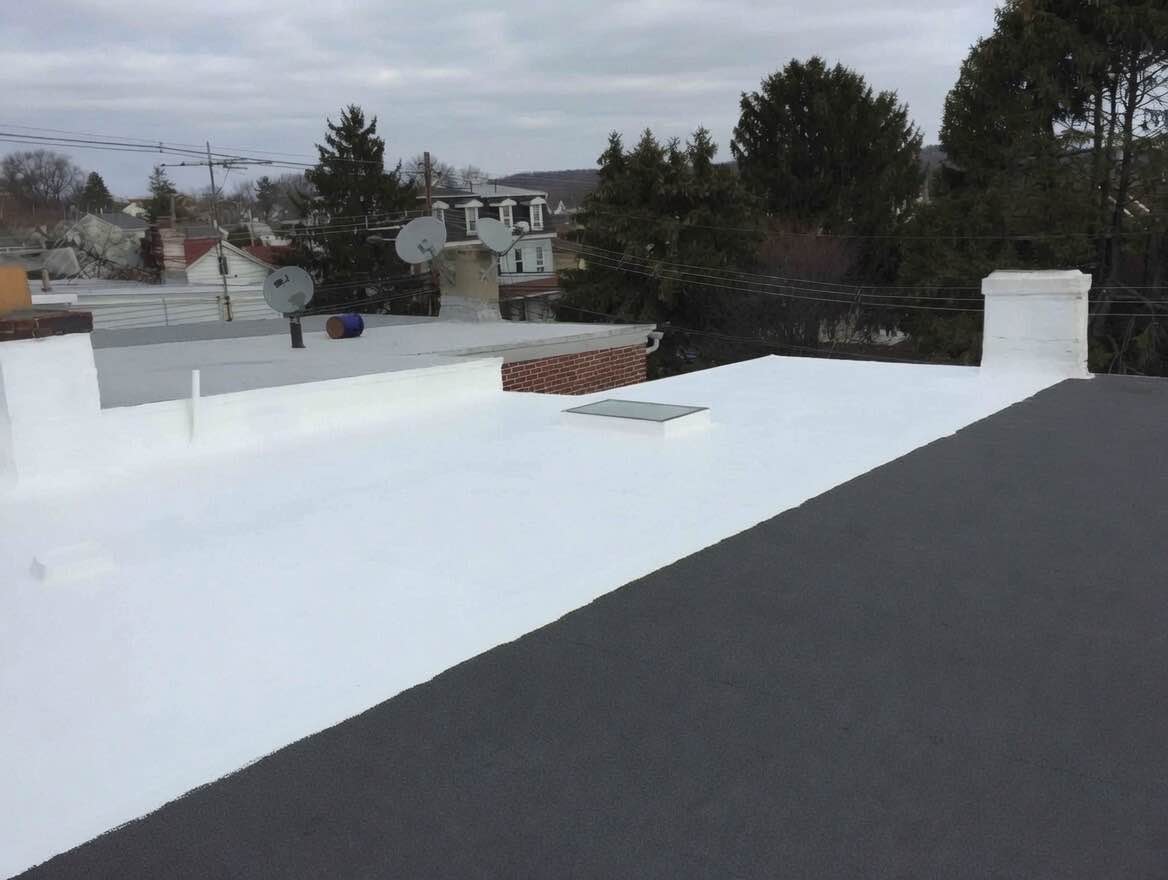
What you end up with is a seamless white membrane over the old asphalt. It reflects up to 88% of solar energy, drops rooftop temperatures by 50 degrees Fahrenheit or more in summer, and stands up to ponding water, which matters because older mod-bit roofs almost always have a few low spots that hold water after a storm. Warranties run 10, 15, or 20 years depending on mil thickness, and when the coating eventually wears, it gets washed and recoated. No tear-off, ever.
Choose silicone when the roof is leaking or close to it, when low areas see periodic ponding water, or when you want a manufacturer-warranted system with documentation behind it.
Option two: reflective aluminum coating
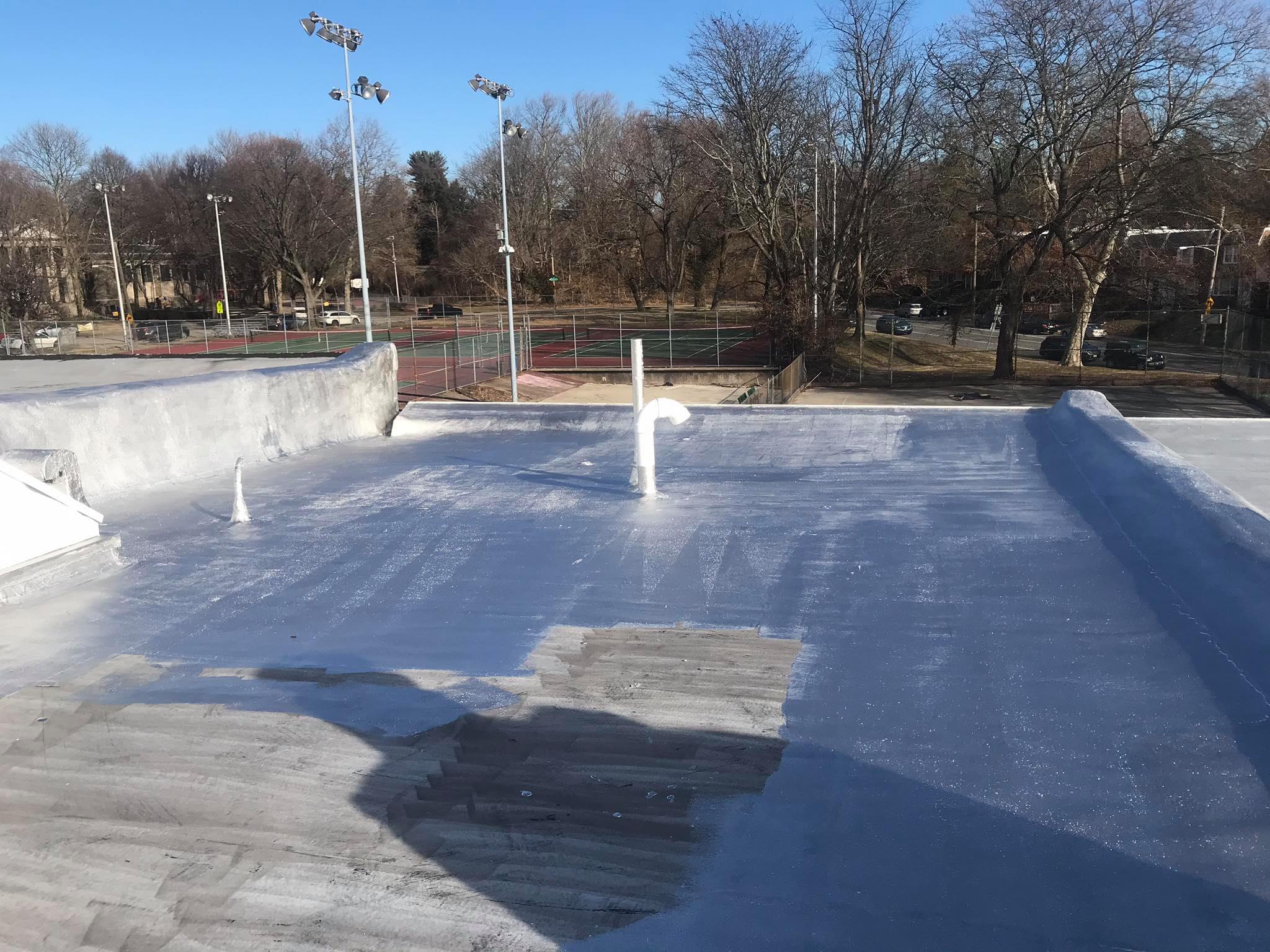
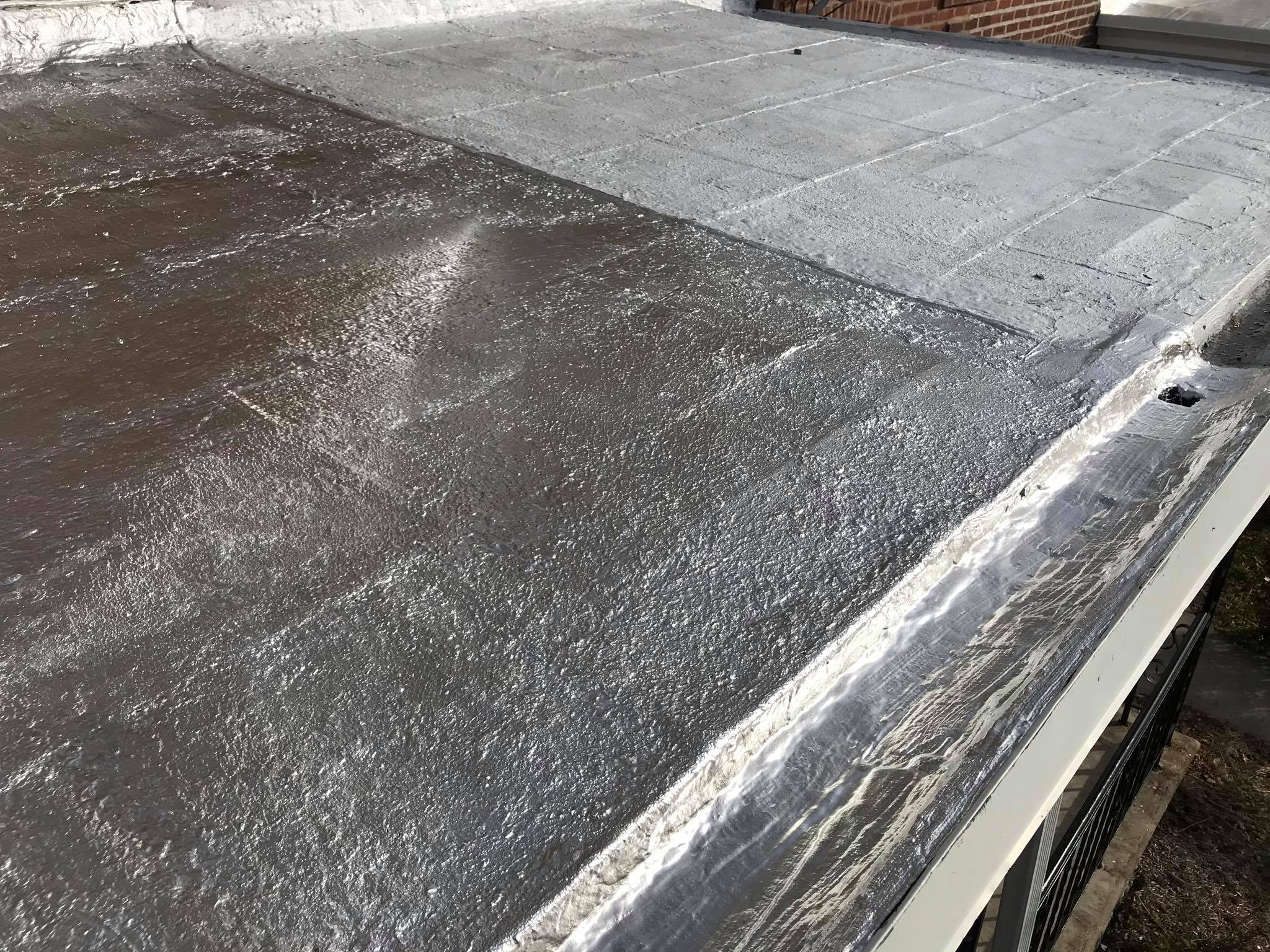
Aluminum roof coating is the traditional maintenance coat for asphalt roofs, and it still earns its keep. It goes on over a cleaned and repaired mod-bit or BUR surface and does two jobs: it shields the asphalt from the UV that dries it out, and it turns a black heat-soaked roof into a bright reflective one. The oils stay in the membrane longer, the roof runs cooler, and the aging clock slows down considerably.
It costs meaningfully less than a silicone system. What it does not do is make a failing roof waterproof; it is protection and reflection, not a new membrane. Choose aluminum when the roof is still watertight and what you want is to keep it that way longer for the least money. For a lot of owners with a mid-life mod-bit roof, that is the right recommendation, and we make it even though it is the cheaper ticket.
What about gravel-surfaced built-up roofs?
Older BUR systems are often finished with a layer of loose gravel. Neither coating bonds to loose stone, so on those roofs the gravel comes off first. Once it is removed and the surface underneath is cleaned and repaired, a built-up roof takes a coating the same way smooth mod-bit does. We include the gravel removal in the prep and in the written quote, so there is no surprise line item later.
How the job runs
Both options follow the same six-step process we use on every roof: on-site inspection and clear assessment by one of the owners, deep clean, repairs and details, seam and transition reinforcement, coating application, and a final walk with warranty registration. Most jobs take 3 to 7 working days and the building stays open the whole time. If you are a facility manager weighing this against a replacement quote, our commercial roof coating page goes deeper on cost, scheduling, and the maintenance-expense angle. If the immediate problem is water coming in, start with flat roof repair; stopping the leak and coating the roof do not have to happen on the same day.
Which option we will recommend, and why you can trust it
When one of the owners walks your roof, the recommendation comes down to three things: the condition of the plies, how the roof drains, and how long you need it to last. A dry, watertight roof with good drainage and a 5-to-10 year horizon points to aluminum. A roof with failing seams, low spots that hold water, or an owner who wants 15 to 20 warranted years points to silicone. If the plies are saturated or the deck is compromised, the answer is neither, and we will say so. We never sell a coating over a roof that needs to come off.
Pricing follows the work: silicone restorations run $3 to $7 per square foot, aluminum comes in under that, and both are a fraction of the $10 to $18 per square foot a tear-off costs. Either way, the quote is fixed and in writing before we start.
Where we do this work
Mod-bit and built-up roofs are everywhere in our footprint, on the older commercial stock and rowhomes of Philadelphia and across the boroughs and farm-country warehouses of Lancaster County alike. We serve ten counties in southeastern Pennsylvania and the Lehigh Valley from our base in Chester County. The full lineup, including EPDM rubber restoration, is on our services page.
Mod-bit and BUR questions
Silicone or aluminum coating: which is right for my mod-bit roof?
Silicone is the bigger investment and the bigger result: a seamless waterproof membrane that stands up to ponding water and carries a 10, 15, or 20 year warranty. Aluminum coating costs less and is the right call when the roof is watertight and mainly needs UV protection and heat reflection to slow the aging down. We look at the roof's condition, drainage, and your budget, then recommend one. Sometimes the plain answer is the cheaper one.
Can you coat a built-up roof that has gravel on it?
Not over the loose gravel. Coatings need a clean, sound surface to bond to, so on a gravel-surfaced BUR the loose aggregate has to come off first. Once the gravel is removed and the surface is cleaned and prepped, a built-up roof coats the same way a smooth mod-bit roof does. We handle that removal as part of the prep.
My mod-bit roof is losing granules. Is it too far gone?
Usually not. Granule loss is how mod-bit ages: the sun dries the asphalt out and the granules that protected it wash into the gutters. It means the roof is asking for help, not that it is dead. As long as the plies underneath are sound and dry, a granule-shedding roof is a normal restoration candidate. If the plies are saturated, we will find that during the inspection and tell you straight.
How long does a mod-bit restoration take and what does it cost?
Most jobs finish in 3 to 7 working days with the building open throughout. Silicone restorations run $3 to $7 per square foot; aluminum coating comes in under that. Both are a fraction of the $10 to $18 per square foot a tear-off costs, and you get a fixed written quote after a free on-site inspection by one of the owners.