Services
EPDM roof restoration.
Aged rubber roofs are the best coating candidates we walk. Here is exactly how a rubber roof coating goes on, shown on a real 18-year-old EPDM roof we restored in Reading, PA.
Home/Services/EPDM roof restoration
EPDM, the black rubber membrane on tens of thousands of flat roofs across Pennsylvania, has a funny way of aging. The rubber sheet itself is tough. Twenty years in, it is usually still doing its job across the field of the roof. What fails is everything else: the glued seams let go, the flashings crack, the surface chalks until your hand comes away black when you touch it.
That failure pattern is exactly why EPDM is the substrate we most often restore instead of replace. The expensive part of the roof, the membrane and everything under it, is still good. The parts that failed are the parts a silicone restoration rebuilds anyway.
Rather than describe the process in the abstract, we will show you a real one.
The roof: 18 years old, Reading, PA
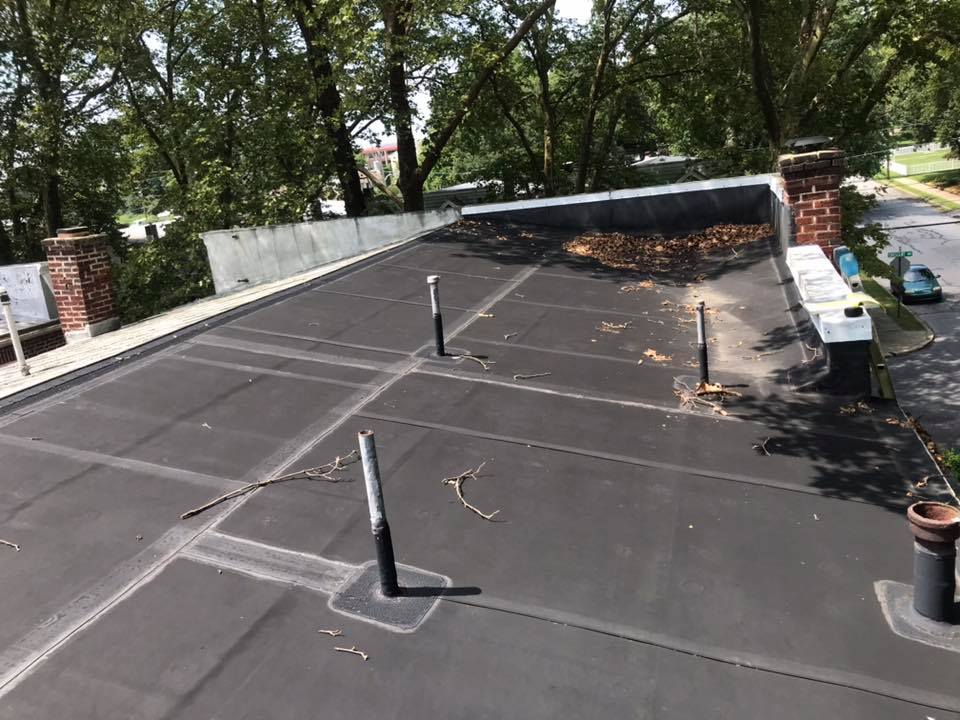
This EPDM roof in Reading had 18 years on it when we walked it. The story was typical: the surface had gone gray and chalky, the seam adhesive was aging out, and debris was collecting on the membrane. The owner was weighing a tear-off quote.
The inspection told a different story. The deck was solid underfoot. The membrane was dry, no saturation, no soft spots. Drainage worked. Everything wrong with this roof was on the surface, which meant everything wrong with it was fixable without touching what was underneath. A textbook coating candidate, and that is what we told the owner.
Step one: deep clean
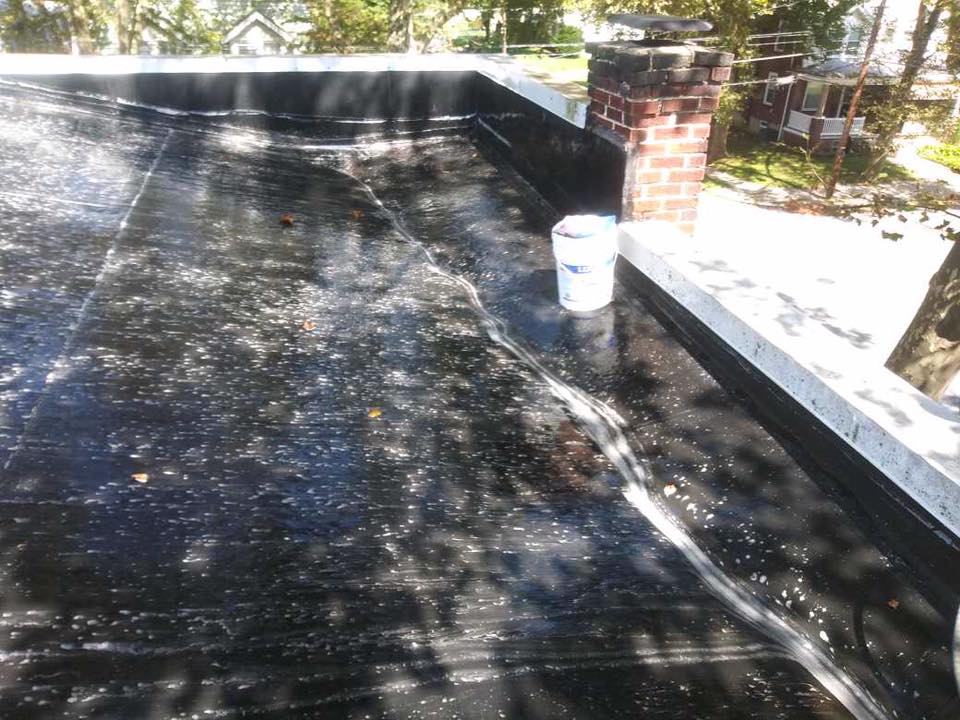
Old EPDM sheds a chalky residue as it weathers, and no coating on earth will bond to it. So the first full day of work is cleaning: power washing every square foot with manufacturer-approved cleaners, stripping off the chalk, dirt, and biological growth until we are back to sound rubber. On the Reading job you could see the membrane change color as the years washed off. This step is slow, unglamorous, and completely non-negotiable. A coating is only as good as what it sticks to.
Step two: reinforce every seam
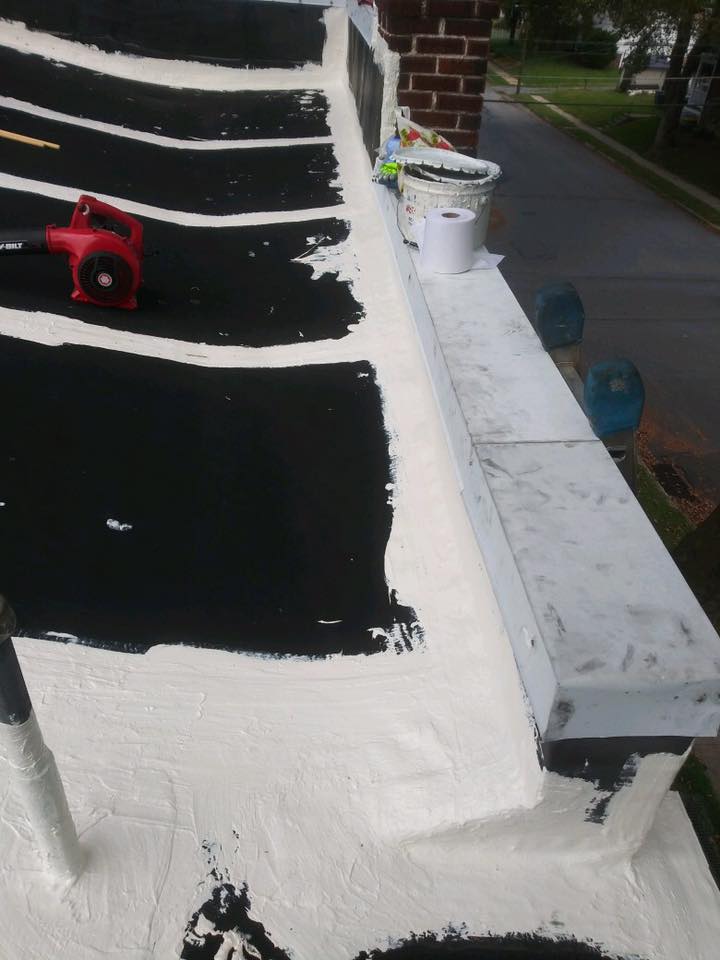
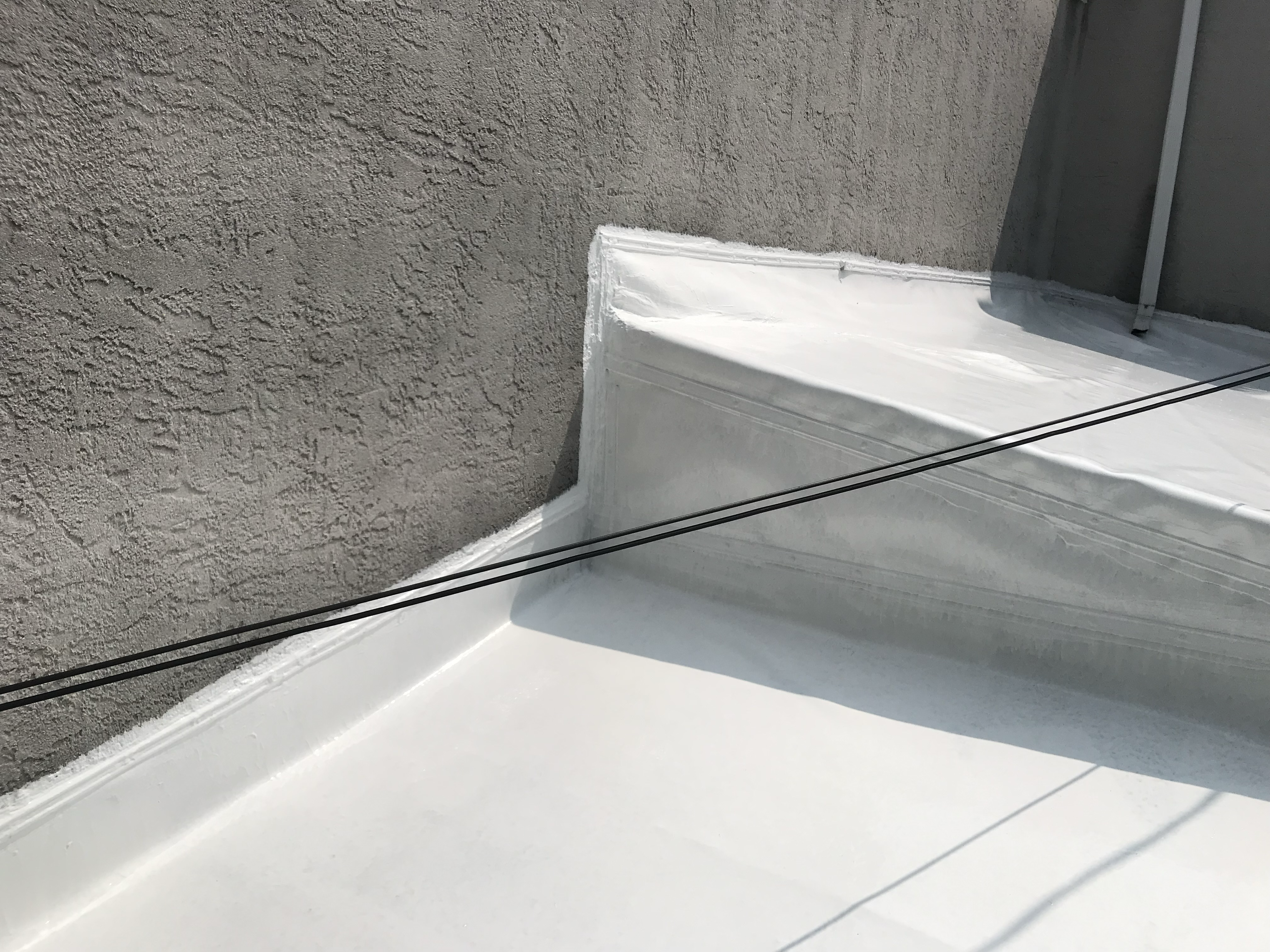
Here is the difference between a real restoration and somebody rolling coating over a tired roof. Seams are where EPDM fails, so seams get rebuilt, not just coated. On the Reading roof, every seam, every flashing, and every penetration got a strip of polyester fabric embedded in wet silicone: a reinforced, flexible bridge over the exact places the roof would have failed next. The same detail goes on parapet transitions and around every pipe. When we are done with this step, the weakest points on the roof have become the strongest.
Step three: two coats of 100% silicone
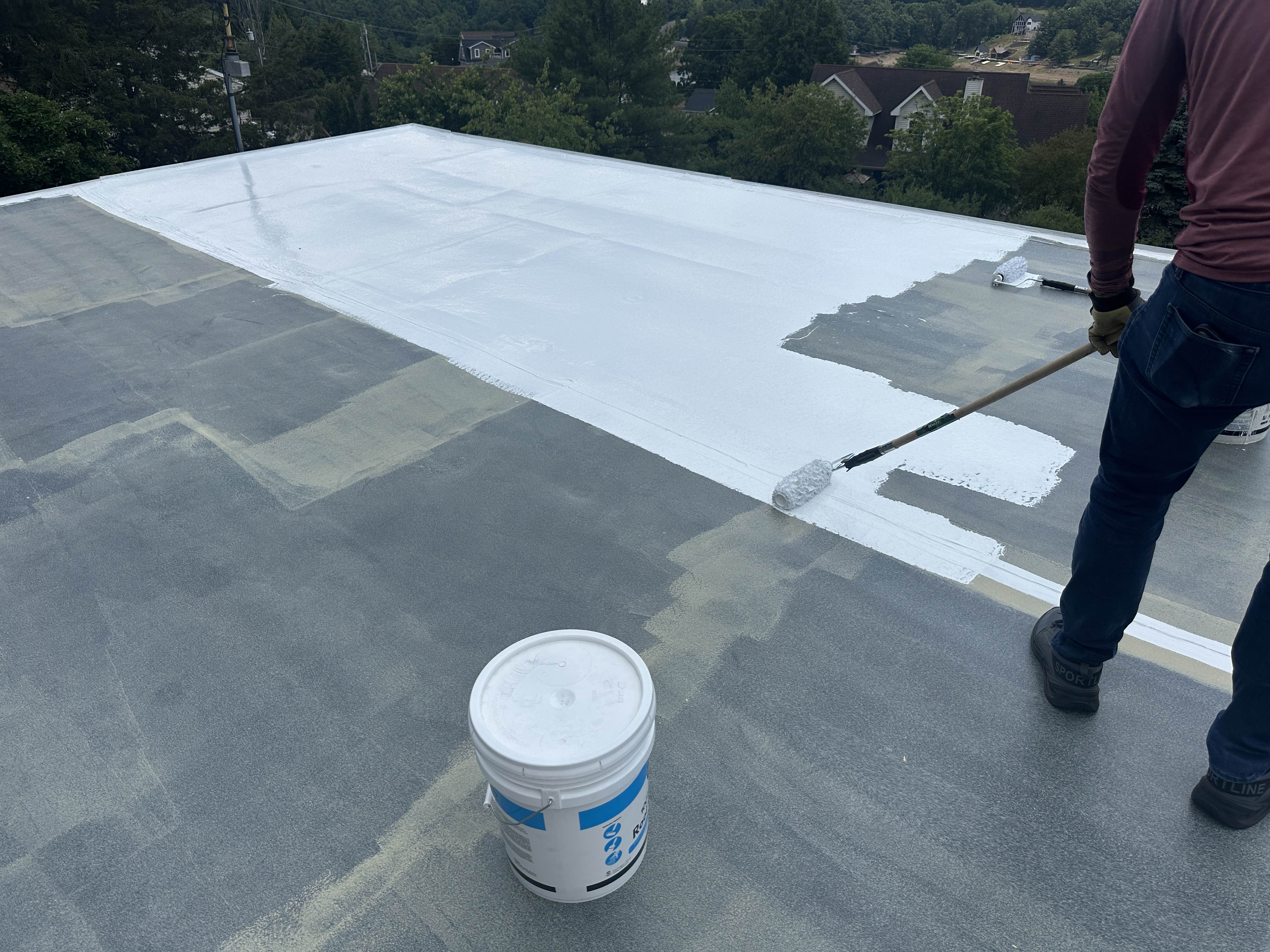
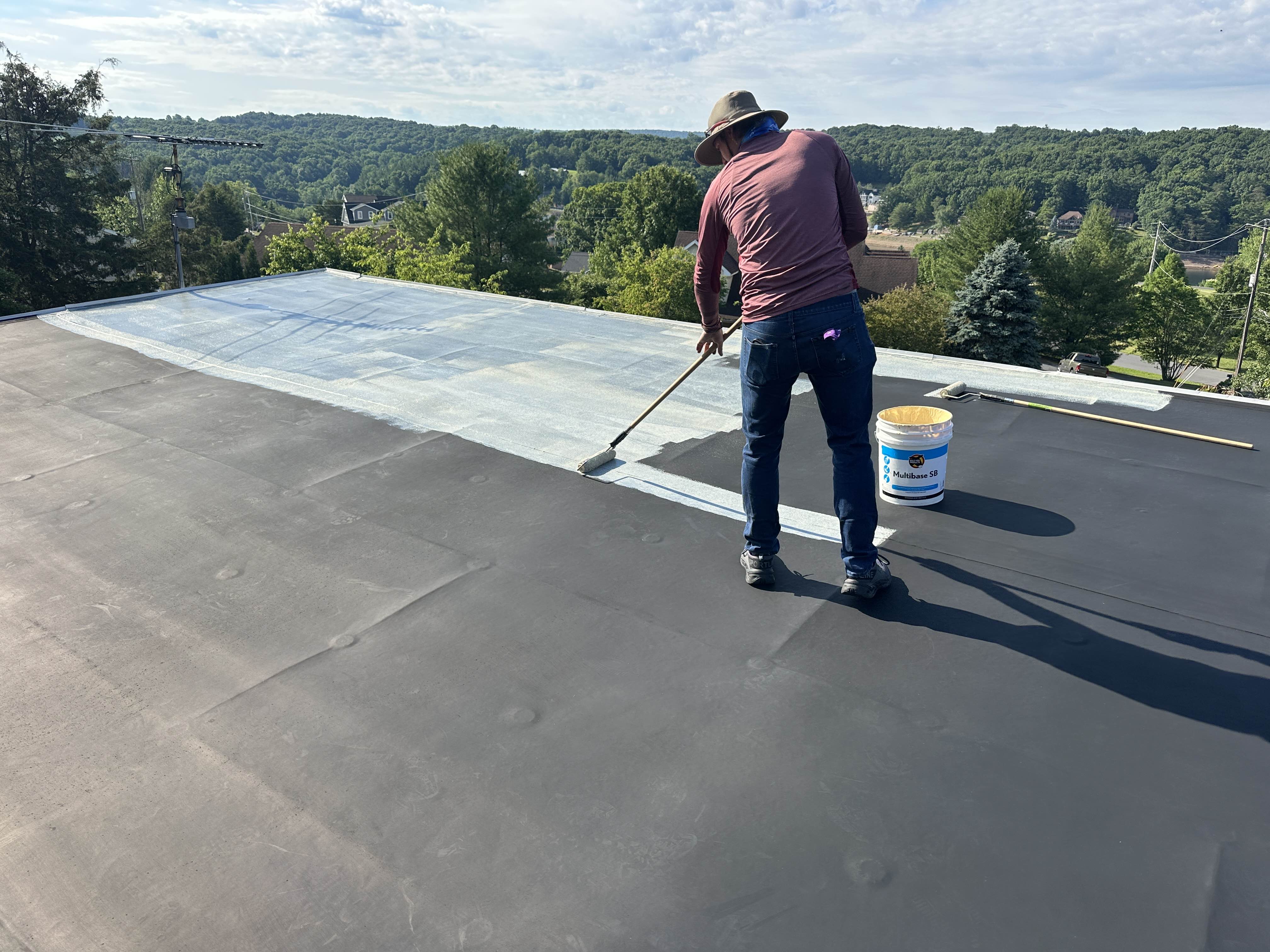
With the roof clean and the details reinforced, the field gets coated: a base coat of Mule-Hide 100% silicone applied to the manufacturer's mil spec, allowed to cure, then a top coat over it. We take wet-mil readings throughout and log them, because the warranty is written against that thickness and we want the paperwork to prove it.
The result is what you see above: an 18-year-old black rubber roof turned into a seamless, bright white membrane. No seams left for water to find. A surface that reflects up to 88% of solar energy instead of soaking it up, and one that stands up to ponding water in the low spots. The owner got a manufacturer warranty on a roof that was about to be quoted for demolition, at a fraction of the tear-off price.
What this costs, and what it saves
EPDM restoration follows our standard pricing: $3 to $7 per square foot depending on the roof's condition and the warranty length you choose (10, 15, or 20 years by mil thickness). Replacement of the same roof typically runs $10 to $18 per square foot. On a rubber roof of any size, the difference is tens of thousands of dollars, and because it is restoration rather than replacement, it is often treated as a maintenance expense rather than a capital improvement. Confirm that with your tax advisor.
There is a longer-term saving too. Silicone is recoatable forever. When this coating wears down 15 or 20 years from now, the roof gets washed and recoated. The tear-off never comes back on the table.
Is your rubber roof a candidate?
Most aged EPDM is. The disqualifiers are the ones you would guess: a membrane saturated with water underneath, a rotted deck, failed insulation. Those are structural problems and we will not coat over them. If your roof only leaks in a spot or two and the membrane is otherwise healthy, a targeted fix might be all you need; our flat roof repair page covers when a repair is enough. And if you are managing a larger building, the logistics side (schedule, documentation, keeping the building open) is covered on our commercial roof coating page, with the rest of the lineup at services.
We restore EPDM across our whole footprint, including Reading and the rest of Berks County, where roofs like this one are everywhere.
EPDM restoration questions
How old can an EPDM roof be and still get coated?
Age matters less than condition. The Reading roof we restored was 18 years old and made a fine candidate because the deck was sound and the membrane was dry. We have walked younger roofs that failed the test because water had gotten under the rubber. If the membrane is intact and not saturated, an EPDM roof from the 2000s is usually still coatable.
Why do EPDM seams fail before the rubber does?
The rubber sheet itself is tough and often lasts decades. The seams are glued laps, and the adhesive ages faster than the membrane. Sun, heat cycles, and movement slowly let the laps go, and that is where the water gets in. That is why our restoration reinforces every seam with polyester fabric embedded in silicone instead of just coating over them.
Can you coat black EPDM white, and is it worth it?
Yes. Black EPDM absorbs heat all summer; white silicone reflects up to 88% of solar energy and can drop rooftop temperatures by 50 degrees Fahrenheit or more. On top of the waterproofing, you get a cooler roof and less heat load on the space below. The finished roof looks like the after photo on this page: bright white and seamless.
How long does a restored EPDM roof last?
The Mule-Hide warranty runs 10, 15, or 20 years depending on the mil thickness applied, and real-world service life often runs past the warranty. When the silicone eventually wears down, the roof gets washed and recoated. The rubber never has to come off again.
What if my rubber roof already leaks?
Leaks get repaired during prep, before any coating goes down. Failed seams, flashings, and penetrations are rebuilt, and any spot holding moisture is cut out, dried, and treated first, because silicone will not bond to a wet substrate. If the leaks turn out to be structural, we will tell you the roof is not a coating candidate and say so at the inspection.