Services
Commercial roof coating in PA.
Restore your warehouse, retail, or office flat roof for 30 to 50% of replacement cost. Most jobs done in 3 to 7 working days, and the building never closes.
Home/Services/Commercial roof coating
If you manage a commercial building in southeastern Pennsylvania, you already know how the roof conversation usually goes. The roof starts leaking, you call a roofer, and the quote that comes back is for a full tear-off: $10 to $18 per square foot, weeks of disruption, dumpsters in the parking lot, and a building open to the weather while the work happens.
We do the other thing. A commercial roof coating restores the roof you already have. We clean it, repair the failures, reinforce every seam and penetration, and seal the whole surface under two coats of Mule-Hide 100% silicone. Typical cost is $3 to $7 per square foot. Typical schedule is 3 to 7 working days. And the part facility managers care about most: your building stays open the entire time.
Who this is for
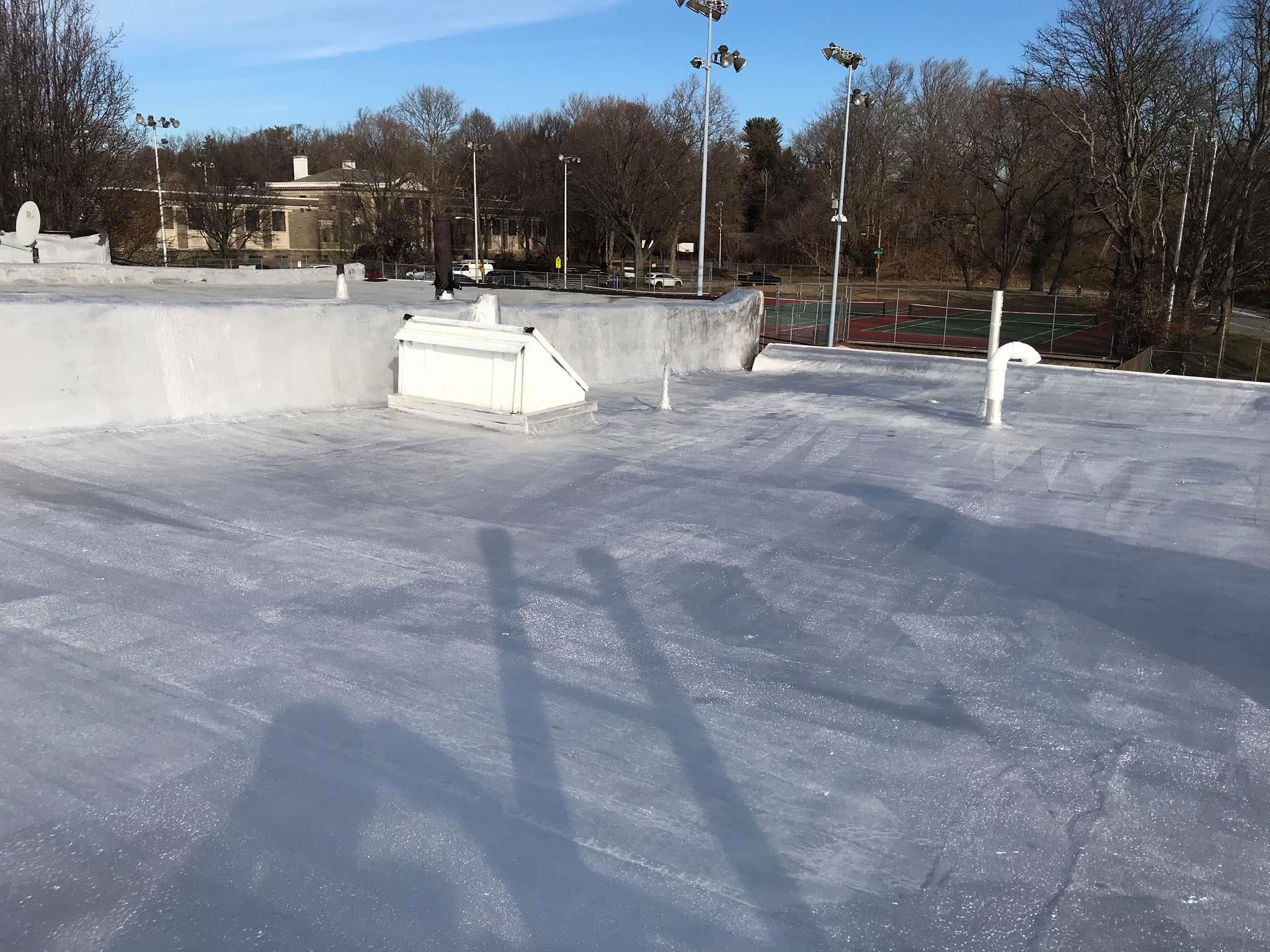
Our commercial work covers warehouses, distribution buildings, retail strips, standalone stores, offices, and mixed-use buildings on flat or low-slope roofs. The substrates vary (EPDM, TPO, aged PVC, modified bitumen, built-up, spray foam, metal), but the situation is usually the same: the roof is 15 to 25 years old, the membrane is weathered, a few leaks have shown up at seams or around rooftop units, and someone has to decide what to do before the next round of quotes gets scarier.
The plain answer, on most of the roofs we walk, is that the roof does not need to come off. It needs to be cleaned, repaired, and sealed. If your roof is the exception, we will tell you that on the spot. We never sell a coating over a roof that needs to come off.
Why the building stays open
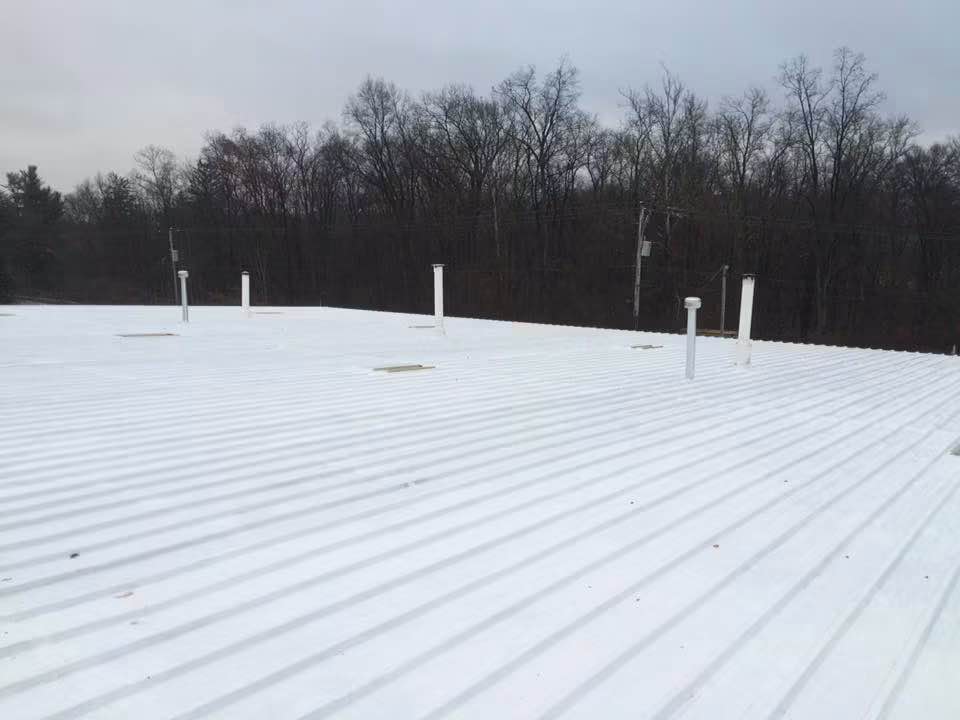
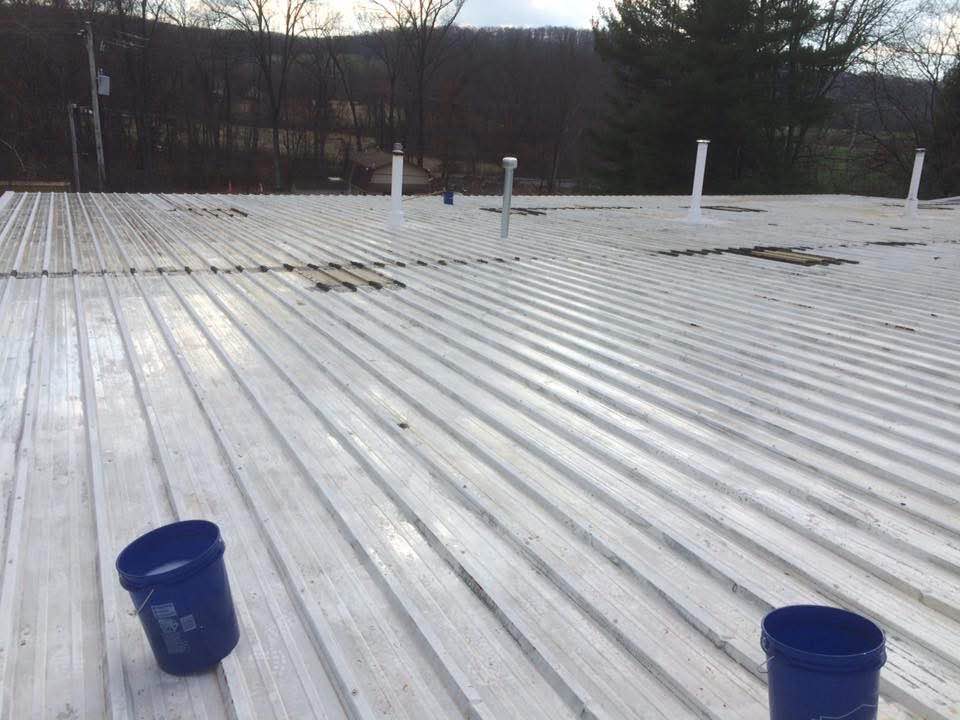
A coating is not demolition. Nothing gets torn off, so the building is never exposed. There is no debris coming down, no crane day, no re-routing your loading dock for two weeks. The crew works on the roof; your tenants and your operations work under it. We coordinate staging and roof access around your hours, and for buildings with sensitive operations below (food, retail, medical offices), we plan the noisy work, mostly the power washing, for the times you pick.
For a facility manager, that changes the math. The real cost of a roof project is the contract price plus the disruption, and a coating takes the disruption off the table.
The maintenance-expense angle
Here is the part your controller will want to hear. A tear-off and replacement is a capital improvement, depreciated over decades. A restoration coating is frequently treated as repair and maintenance, which can be deductible in the year incurred. Same watertight roof, very different line on the books. Confirm the treatment with your tax advisor (every situation is different), and if you want the longer version, we wrote it up on the blog: is a silicone roof coating tax deductible.
How the job runs
Every commercial coating follows the same six steps, and every step gets documented.
- Inspection and clear assessment. One of the owners (Keith, Brian, or Jason) walks the roof, photographs every detail, and tells you whether it is a coating candidate. Free, no obligation, and the quote that follows is fixed and in writing.
- Deep clean. The full surface gets power washed with manufacturer-approved cleaners. The coating is only as good as what it bonds to.
- Repairs and details. Open seams, splits, blisters, failing flashings, and penetrations get fixed before any coating goes down.
- Seam and transition reinforcement. Every seam, parapet transition, and penetration gets polyester fabric embedded in silicone. This is where flat roofs fail, so this is where we spend the time.
- Two-coat silicone application. Base coat to the manufacturer's mil spec, cured, then top coat. Wet-mil readings are taken and logged through the whole application.
- Final walk and warranty registration. You walk the finished roof with us (or we film it and walk you through on video), then the Mule-Hide warranty is registered in your name.
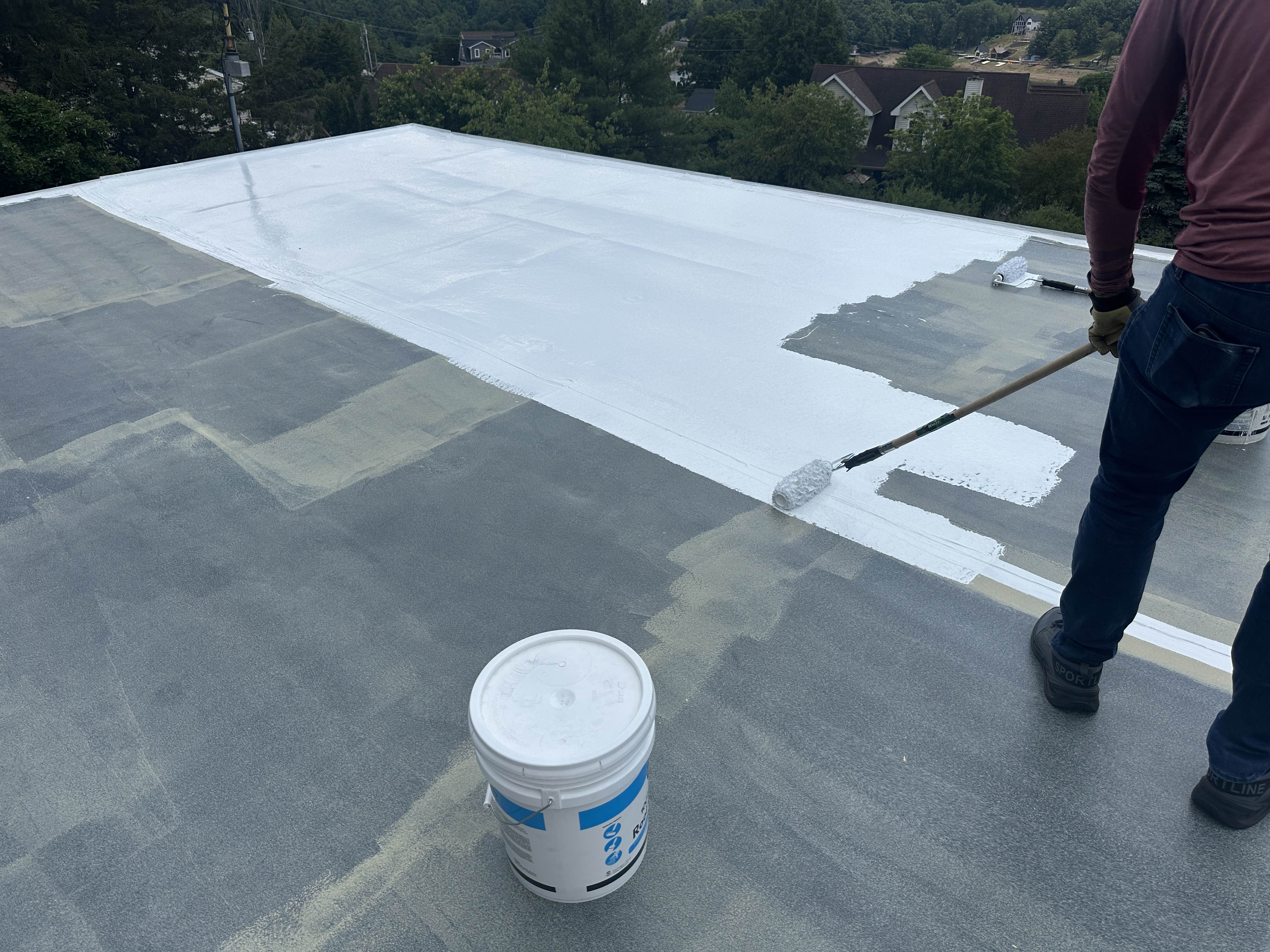
Documentation your owner will actually want
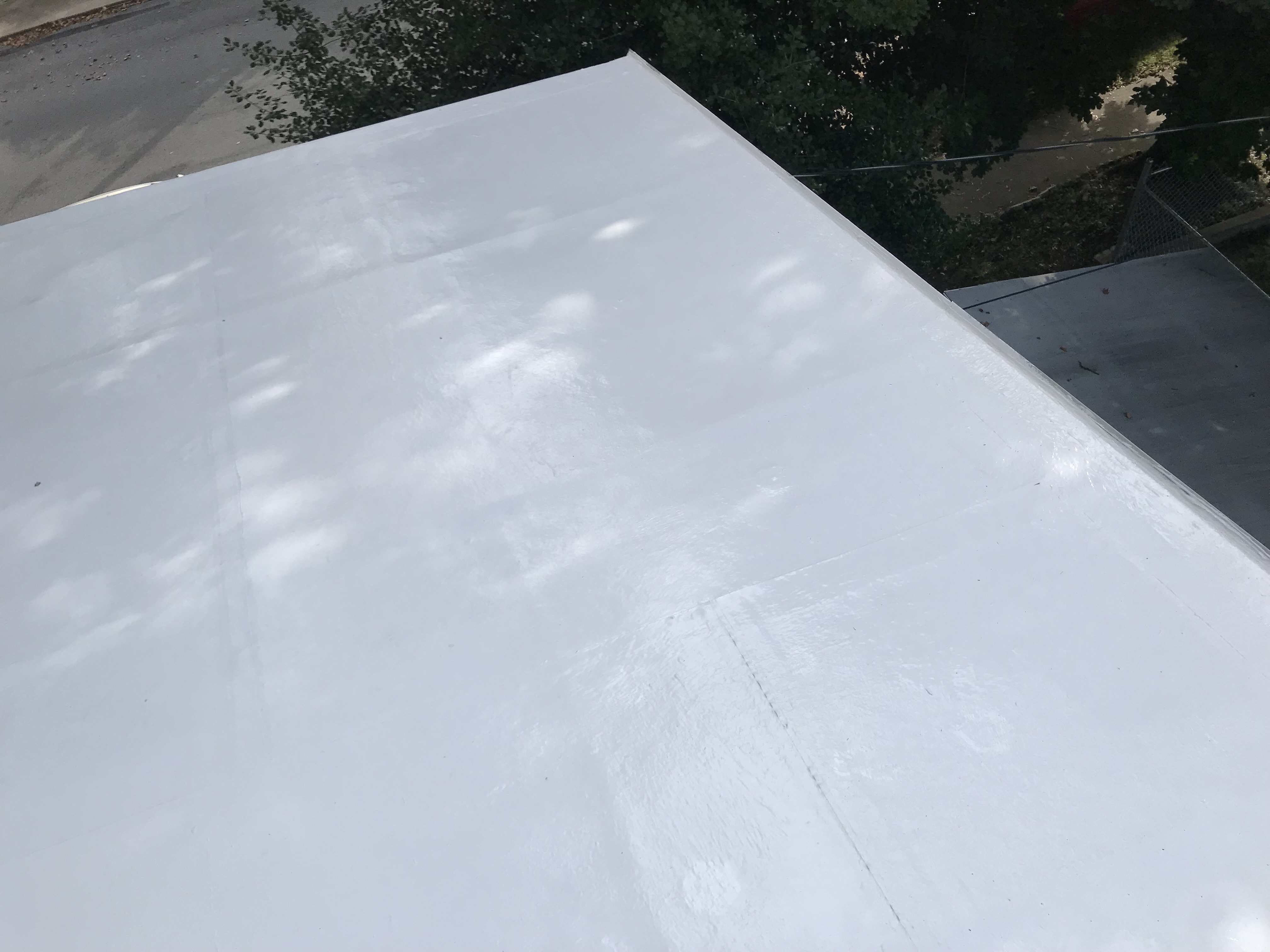
Commercial roofing has a paperwork problem: plenty of buildings have a roof warranty somewhere, and nobody can find it or prove the install met spec. We close that gap on every job. You get dated photos from before, during, and after, the mil-thickness log from the application, and the registered manufacturer warranty: 10, 15, or 20 years depending on the mil spec you choose. If the building sells, the file transfers with it. If a question ever comes up, the answer is in writing.
And when the coating eventually wears down years from now, it does not get torn off. It gets washed and recoated. That is the quiet advantage of silicone: you buy the tear-off decision out of your future.
A white roof works for the building, too
The finished silicone surface is bright white and reflects up to 88% of solar energy, which can drop rooftop temperatures by 50 degrees Fahrenheit or more on a summer afternoon. On a big flat roof, that shows up as lower cooling load on the floors below and less heat stress on rooftop units. Silicone also stands up to ponding water, which matters on the dead-flat commercial roofs common around here; the periodic ponding water that ruins acrylic coatings does not degrade 100% silicone.
Where we do commercial work
We are based in Chester County and run commercial jobs across ten counties in southeastern Pennsylvania and the Lehigh Valley, along the I-76, I-476, I-78, I-95, and US-222 corridors. That includes the warehouse and industrial stock around Montgomery County and the commercial buildings of Philadelphia. Wherever the building is, the same three owners quote it and the same crew coats it.
If your commercial roof is EPDM rubber, our EPDM roof restoration page walks through a real job start to finish. If it is a granulated asphalt roof, see modified bitumen restoration, where we also offer a reflective aluminum option. And the full lineup is on our services page.
Questions facility managers ask
Will my building have to close during the work?
No. There is no tear-off, so the building is never opened up. We stage materials, control access to the roof, and coordinate around your hours. Tenants and operations carry on below the whole time. The main things you will notice are our lift or ladder at the staging point and the crew on the roof.
How long does a commercial roof coating take?
Most 5,000 to 30,000 square foot roofs are done in 3 to 7 working days, weather permitting. Cleaning, repairs, reinforcement, and two coats each need proper cure time between phases, so we do not compress the schedule. Larger roofs are quoted with a day count in writing.
What does it cost compared to replacement?
Coating typically runs $3 to $7 per square foot, against $10 to $18 per square foot for a tear-off and replacement, so 30 to 50% of the replacement number. Most of our commercial jobs land between $5,000 and $40,000. You get a fixed written quote after a free on-site inspection, not an estimate that grows later.
Can a roof coating count as a maintenance expense?
Often, yes. A restoration coating is frequently treated as a repair and maintenance expense, deductible in the year incurred, rather than a capital improvement depreciated over decades. That treatment depends on your situation, so confirm with your tax advisor before you count on it.
What documentation do I get for the warranty?
Photos of the roof before, during, and after, wet-mil thickness readings logged through the whole application, and the registered Mule-Hide manufacturer warranty (10, 15, or 20 years depending on the mil spec you choose). The file is yours to keep, hand to your owner, or pass along if the building sells.