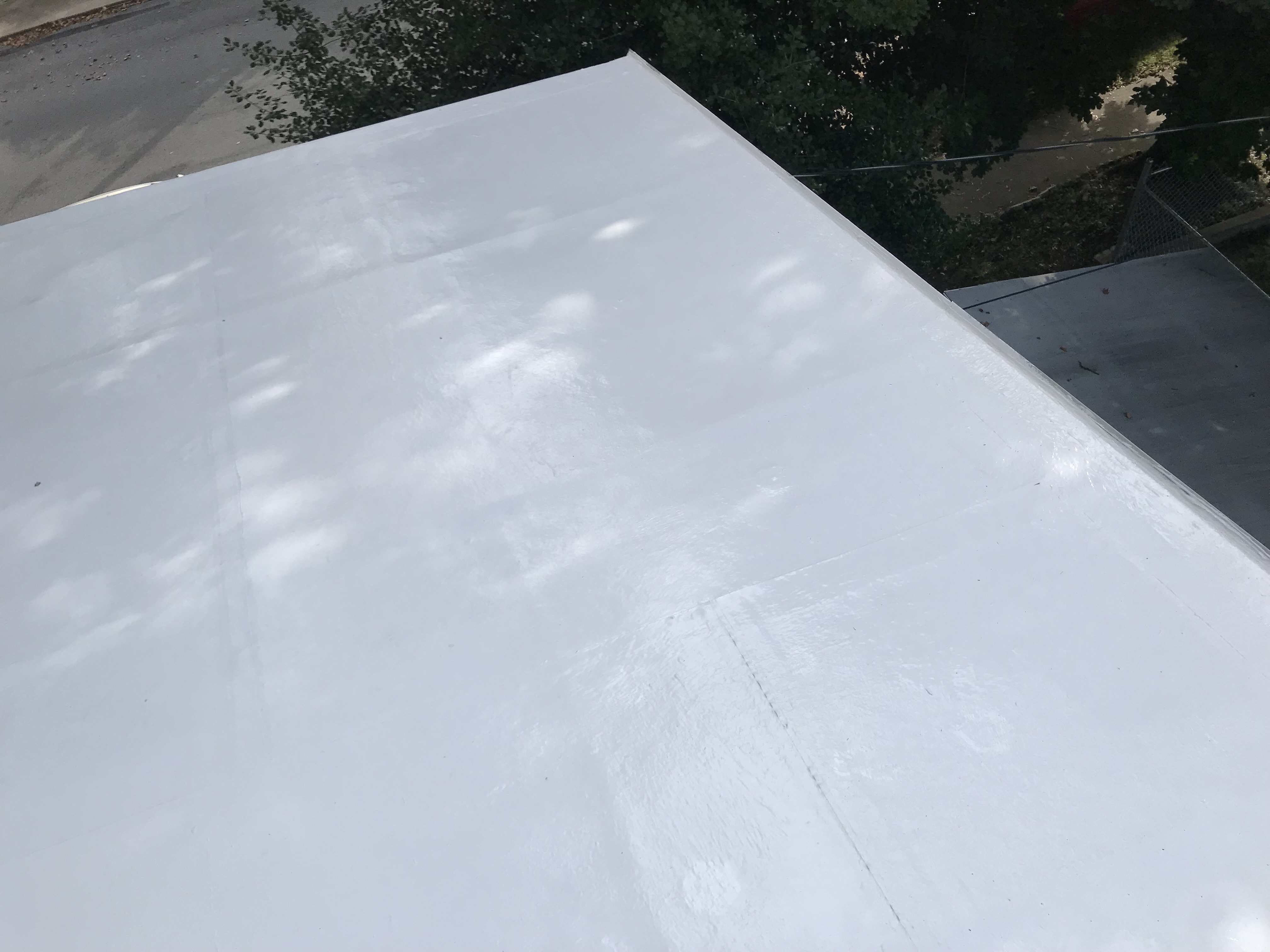
A building owner asked me a sharp question on a roof last month. He'd been watching the news, gas was creeping up again, and he wanted to know whether the price I'd quoted him would move with it. Fair question. But the more useful version of that question isn't whether your coating will cost more. It's this: when oil gets expensive, what happens to the gap between coating this roof and tearing it off for a new one?
The short answer is that the gap gets wider. It's already wide. And once you see why, you start looking at a roof a little differently.
Almost everything on a roof is made from oil
Walk through what actually goes into a typical flat-roof replacement and you'll notice a pattern. Nearly every line item traces back to a barrel of crude:
- Asphalt shingles: asphalt is a petroleum product, mixed with more petroleum-derived materials.
- EPDM rubber membrane: a synthetic rubber built from petroleum feedstocks.
- TPO membrane: a thermoplastic made from petroleum-based polymers.
- Modified bitumen and built-up roofs: asphalt again, straight from the refinery.
- Rigid foam insulation: the polyiso board under the membrane is a petrochemical product too.
- Adhesives, primers, and acrylic coatings: petroleum, petroleum, petroleum.
So a roof "replacement" isn't really one purchase. It's a stack of petroleum products (membrane, insulation, glue, fasteners' coatings, the works) bought all at once. When crude tightens, every layer in that stack feels it at roughly the same time.
Silicone is the odd one out
Here's the part most people never hear. A 100% silicone coating doesn't start with oil. It basically starts with sand.
The raw ingredient is silica (ordinary sand). It's cooked down to silicon metal in electric furnaces, then reacted with a simple chemical that traces back to methanol, and methanol can be made from natural gas, coal, or even renewable sources. Crude oil is nowhere in the backbone of the product. So while the rest of the roofing aisle rises and falls with the oil market, the core ingredient of silicone sits largely off to the side.
Think of it this way: replacing a roof is buying a stack of products made from oil. Coating it is buying a product made from sand.
A tear-off is an oil bill from top to bottom
It's not just the materials, either. Strip a roof off and you're paying for things that are also tied to fuel:
- The diesel to haul tons of new material in and tons of old roof out.
- The dumpsters and landfill fees to bury the old membrane and wet insulation.
- The extra labor-days a full tear-off and rebuild takes versus a coating.
Every one of those gets more expensive when energy gets more expensive. A silicone restoration sidesteps most of it: no tear-off, far less material, almost nothing headed to the landfill, and a job measured in days, not weeks.
That's where the growing margin comes from
Put the two side by side. A replacement is oil-exposed on nearly every line: the membrane, the insulation, the adhesives, the fuel, the hauling, the dumpster. A silicone coating is oil-exposed on almost none of them; its main ingredient doesn't come from a barrel, and it uses a fraction of the material and fuel to begin with.
So when oil climbs, both numbers move, but the replacement number moves a lot more. The spread between "tear it off" and "coat it" doesn't just exist; it widens every time energy gets pricier. A restoration that already runs 30–50% of the cost of replacement looks even better the next time crude spikes.
If you're weighing it right now
The practical takeaway is simple: the savings you'd lock in by coating instead of replacing are probably the smallest they'll be for a while. Oil isn't getting structurally cheaper, and every material in a tear-off rides that curve up.
One caveat: coating only works if your roof is a candidate for it. A sound deck and a membrane that's weathered but not waterlogged can be restored; a rotted, saturated roof has to come off no matter what oil is doing. (We laid out how to tell the difference in 5 signs your flat roof is a candidate for a silicone coating.) The economics only help you if the roof qualifies in the first place.
Our take at Smith Roof Coatings
We focus on silicone restorations (the Mule-Hide 100% silicone we install) because for the flat and low-slope roofs around here, it delivers longer life, holds up to ponding water, and carries a supply chain that doesn't flinch every time the oil market sneezes. As replacement costs climb with crude, restoration just keeps pulling further ahead on value.
But you'll always get the straight read after a free inspection. If your roof genuinely needs to come off, we'll tell you. We never sell a coating over a roof that's past saving. If it's a candidate, we'll show you the gap in writing, in today's dollars, before you decide anything.
Oil prices are one thing none of us controls. What you can control is whether your next roof decision is tied to them. Want to know which side of that line your building falls on? That's exactly what a free assessment is for.