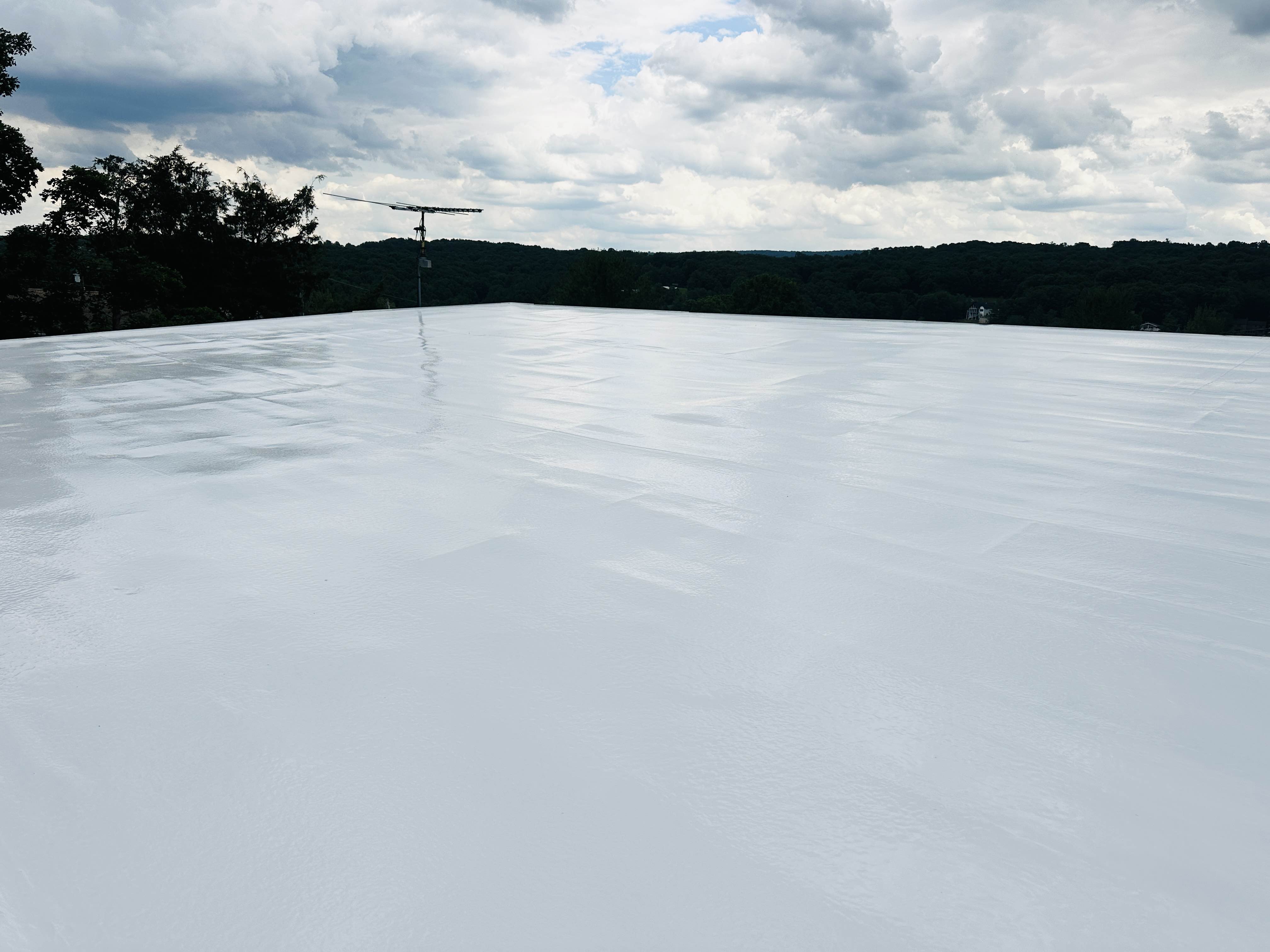
Here's the number most contractors make you sit through a sales presentation to get: a full silicone flat roof coating in Pennsylvania runs $3 to $7 per square foot in 2026. Most complete jobs land between $5,000 and $40,000. A small residential flat roof might come in under that; a very large industrial roof can go over. But if a quote for a proper two-coat silicone restoration falls outside that per-foot range, in either direction, you should ask why.
That's a wide range, though, and the plain version of this article is explaining what puts a specific roof at $3 and what puts it at $7. So let's do that.
The four things that move the price
1. Substrate condition
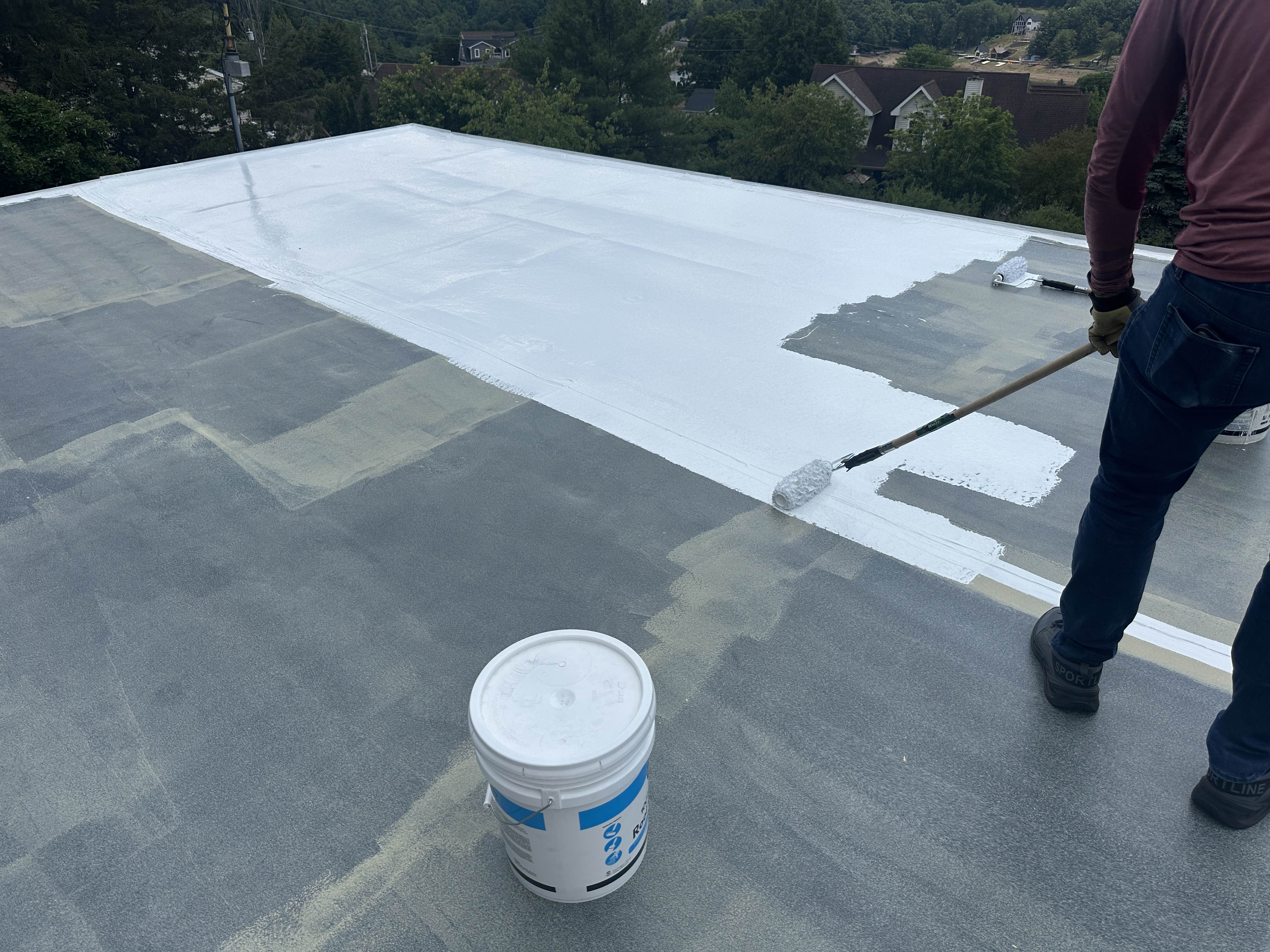
The coating itself is fairly predictable. The prep is not. A roof that just needs a power wash and a handful of seam repairs sits at the low end. A roof with open seams everywhere, failed flashings, blisters, and areas of trapped moisture that have to be cut out and dried needs real repair hours before a drop of silicone goes down. Condition is the single biggest variable, which is why nobody can price your roof accurately from the street. If you're wondering whether your roof is even in restorable shape, we wrote a separate piece on the signs a flat roof is a coating candidate.
2. Mil thickness and warranty tier
Silicone systems are warranted by thickness. A Mule-Hide system carries a 10, 15, or 20 year manufacturer warranty depending on how many mils of cured silicone end up on the roof. More warranty means more material, and material is a big share of the job cost. A 20-year spec on the same roof will always cost more than a 10-year spec. Neither is wrong; it depends on how long you plan to own the building and what your budget cycle looks like.
3. Detail complexity
An open, empty roof coats fast. A roof crowded with HVAC units, pipe penetrations, skylights, parapet walls, and drains does not, because every one of those details gets polyester fabric reinforcement embedded in silicone before the field coats go on. Details are hand work. A 10,000 sq ft warehouse roof with four penetrations can genuinely cost less than a 6,000 sq ft roof with forty.
4. Access
How the crew, the wash water, and the material get to the roof matters. A single-story building with easy ladder access is cheap to work on. A taller building that needs staging, or a tight urban lot where everything gets carried up through the building, adds labor hours that show up in the price.
Coating vs replacement: a clear comparison
The number that puts the coating range in context is what a tear-off and replacement costs in Pennsylvania right now: $10 to $18 per square foot for typical flat roof systems. Here's the side-by-side.
| Silicone restoration | Tear-off & replacement | |
|---|---|---|
| Cost per sq ft | $3 to $7 | $10 to $18 |
| 10,000 sq ft example | $30,000 to $70,000 | $100,000 to $180,000 |
| Timeline | 3 to 7 working days for most jobs | Days to weeks |
| Building disruption | Stays open and operational | Exposed during work; tenants disrupted |
| Waste | None; existing roof stays in place | Tons of old roofing to the landfill |
| Tax treatment | Often a maintenance expense* | Capital improvement, depreciated over decades |
| End of life | Wash and recoat; never tear off | Tear off again |
*Confirm with your tax advisor. Every building's situation is different.
To be fair to replacement: sometimes it's the right call. A rotted deck or a membrane saturated with water isn't a coating candidate, and a contractor who says otherwise is selling you an expensive paint job. We turn those roofs down and say so.
Why our quotes are fixed price
Because the condition of the roof drives the cost, we don't quote until an owner has walked the roof, photographed the details, and checked for trapped moisture. That inspection is free. What comes out of it is a fixed-price written quote: not an "up to" range, not an estimate that grows once the crew shows up. If we find the surprises during the inspection instead of during the job, there's nothing left to change-order you on. The inspection is where the risk gets priced, and we'd rather carry that risk ourselves than hand it to you.
The tax angle most owners miss
A replacement is a capital improvement. You capitalize it and depreciate it over a long schedule. A roof restoration is frequently treated as a maintenance expense instead, which can often be deducted in the year the money is spent. On a $30,000 job, that difference in timing is real money. We walk through the details in our post on silicone coatings and taxes, but the short version is: ask your tax advisor about repair versus improvement treatment before you assume the sticker prices tell the whole story.
What a suspiciously cheap coating quote leaves out
If you collect three quotes and one is dramatically lower, it's usually not because that contractor found a magic supplier. It's because something got left out. The usual suspects:
- Prep. Skipping or shortcutting the power wash and cleaner. Silicone is only as good as what it bonds to; coating over dirt and chalk is how a "10-year" roof fails in three.
- Fabric reinforcement. Brushing coating over seams, flashings, and penetrations instead of embedding polyester fabric in silicone at every one. The details are where flat roofs leak, and bare coating over a moving seam won't hold.
- Mil thickness. One thin coat instead of two coats to manufacturer spec. You can't see the difference from the ground, which is exactly why we log wet-mil readings through every job and hand you the documentation.
- The warranty itself. A manufacturer warranty has to be registered by a contractor following the spec. A coating installed off-spec may cost less and carry nothing but a handshake.
A cheap coating that fails isn't a savings. It's a down payment on doing the job twice.
So what will your roof cost?
Somewhere in that $3 to $7 range, and the only way to pin it down is to look at the roof. One of the owners (Keith, Brian, or Jason) will walk it, tell you straight whether it's a coating candidate, and put a fixed number in writing. If it needs to come off instead, we'll tell you that too. If you'd like to see what a full restoration looks like in practice, our EPDM restoration page walks through a real one start to finish.